LittleOne Mini – 4–8 Channel Desktop Passive Summing Mixer
Compact analog summing, custom-calibrated to your interface. More depth, wider stereo imaging, and natural harmonic character – in the smallest possible footprint.
Price range: €130 – €290 (depending on configuration)
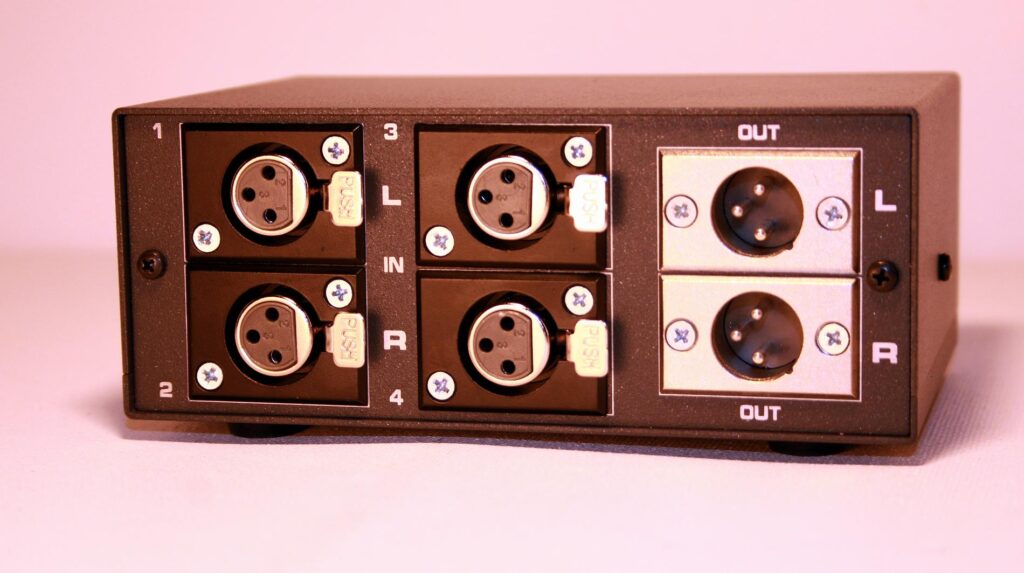
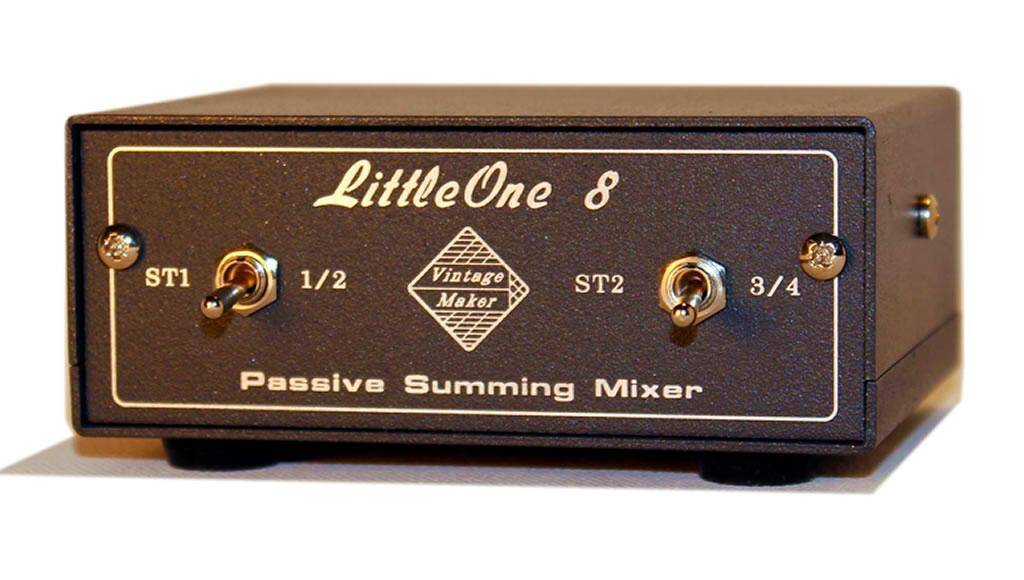
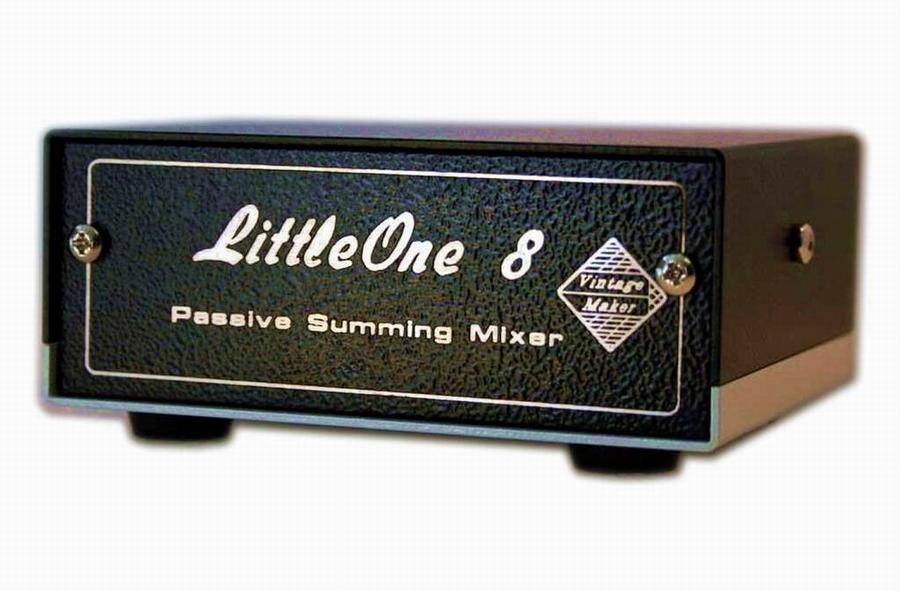
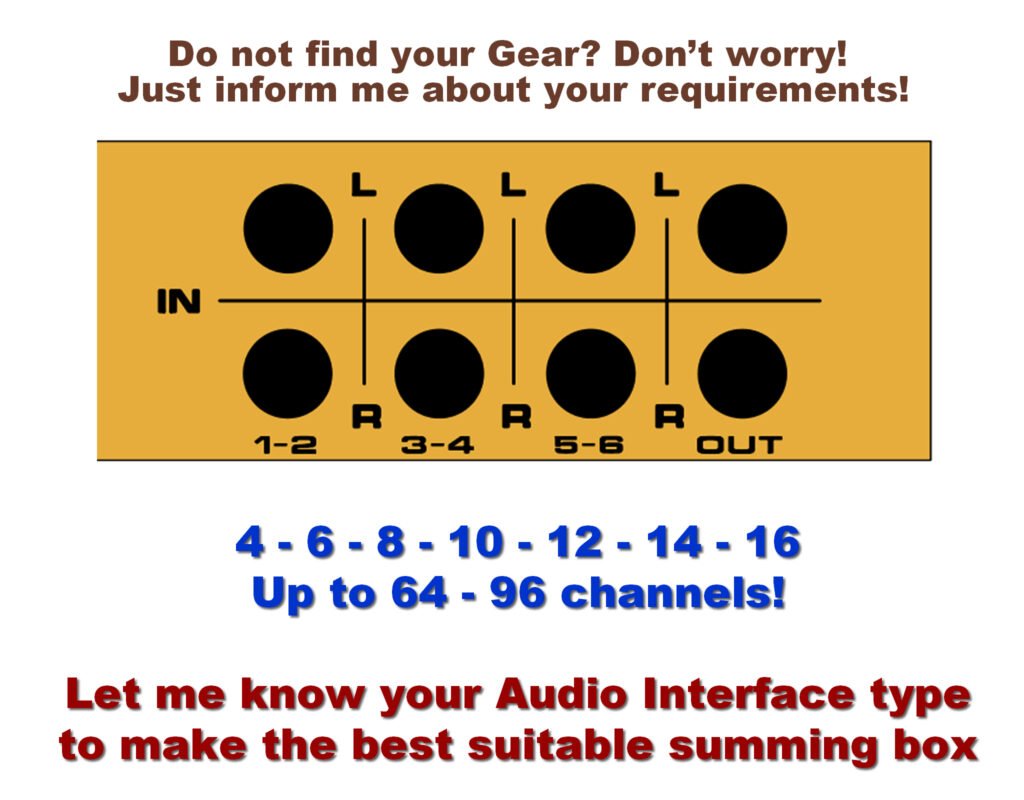
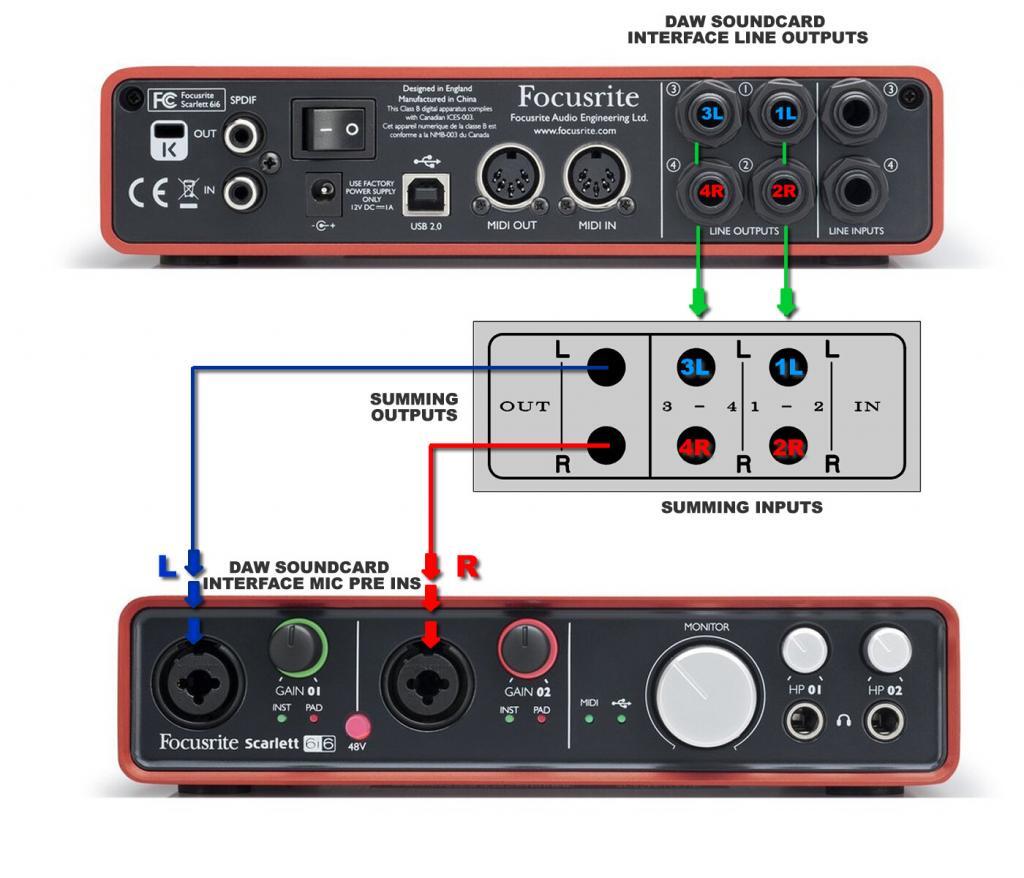
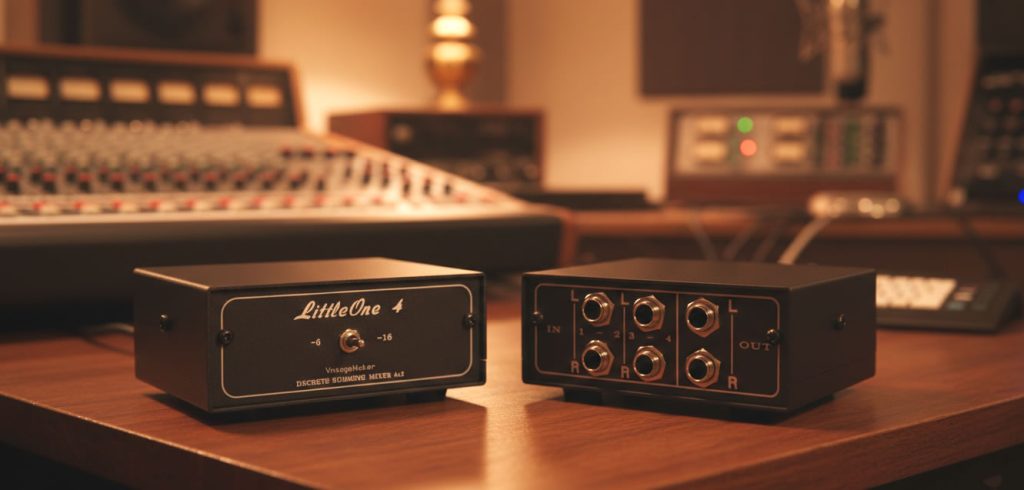
The LittleOne Mini is a handcrafted 4–8 channel desktop passive summing mixer, built and calibrated specifically to your audio interface. It brings the physical signal interaction of real analog summing to compact home studios, mobile setups, and desk-based hybrid workflows – without rack space, power supplies, or complex signal routing. Available in 4, 6, or 8 channel configurations – specify your exact input count when ordering.
Available in 4, 6, or 8 Channel Configurations
← Explore all desktop passive summing mixer configurations
Built Around Your Interface — Not the Other Way Around
Passive summing only performs at its best when the resistor network is precisely matched to the I/O voltage of your specific audio interface. Every LittleOne Mini is individually engineered around your DAW interface’s output level and headroom requirements. This custom calibration approach delivers:
- Stable stereo imaging – no phase shift or center-image drift
- Transient integrity – fast, clean response preserving the snap of drums and plucked strings
- Predictable mix bus behavior – a consistent foundation for outboard compressors and EQs
- Optimal signal-to-noise ratio – matched impedance, maximum usable headroom
Non-customized passive summing boxes are built for average setups. Custom calibration is the difference between analog summing that works — and analog summing that transforms your mixes.
What the LittleOne Mini Does to Your Mix
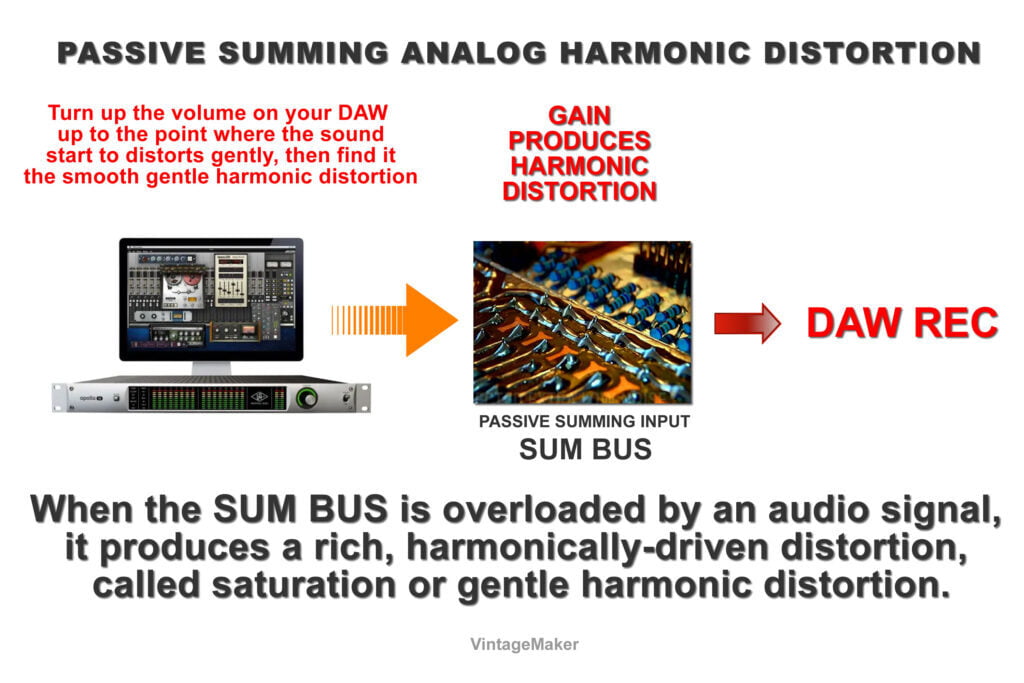
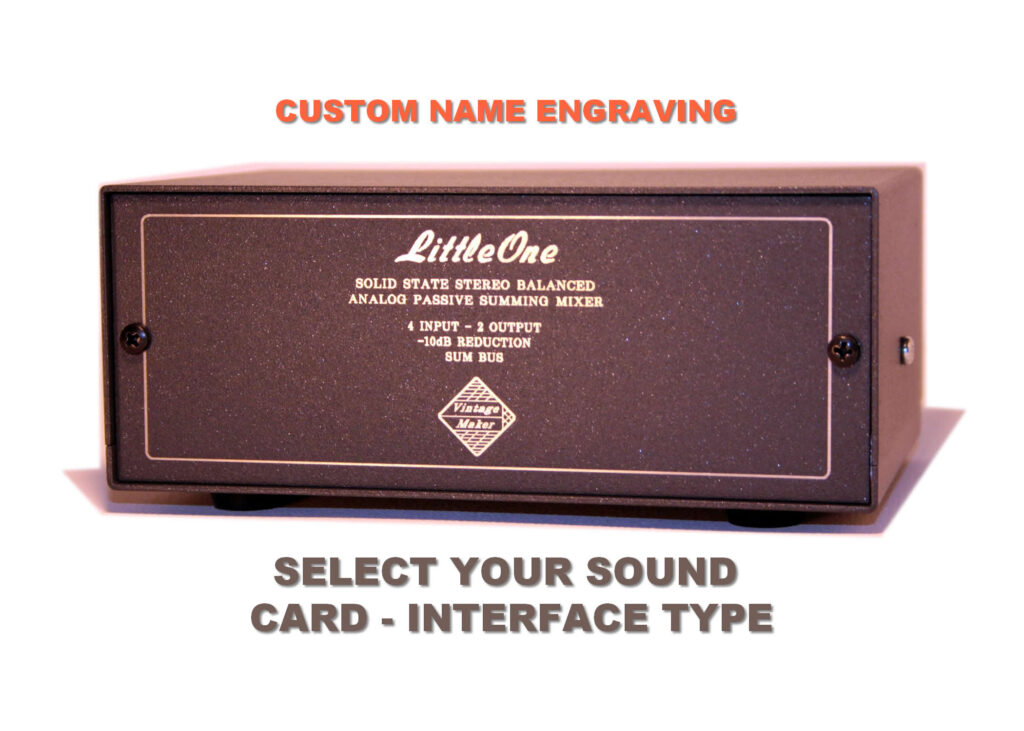
The LittleOne Mini uses the same Floating Differential Bus Summing Network found in all VintageMaker units – a fully balanced, isolated-ground topology that preserves stereo separation and phase-coherent channel interaction. At conservative gain levels, the passive network provides clean, transparent summing with improved stereo imaging and instrument separation compared to digital bouncing. As you push DAW output levels toward and above nominal, the SUM BUS begins to generate the first layer of analog harmonic content – adding warmth, density, and the three-dimensional depth associated with hardware mixing. The makeup gain stage (your interface mic preamps, or optional external preamps) amplifies the summed signal and adds a second harmonic layer, the character of which depends on the preamp design you choose.
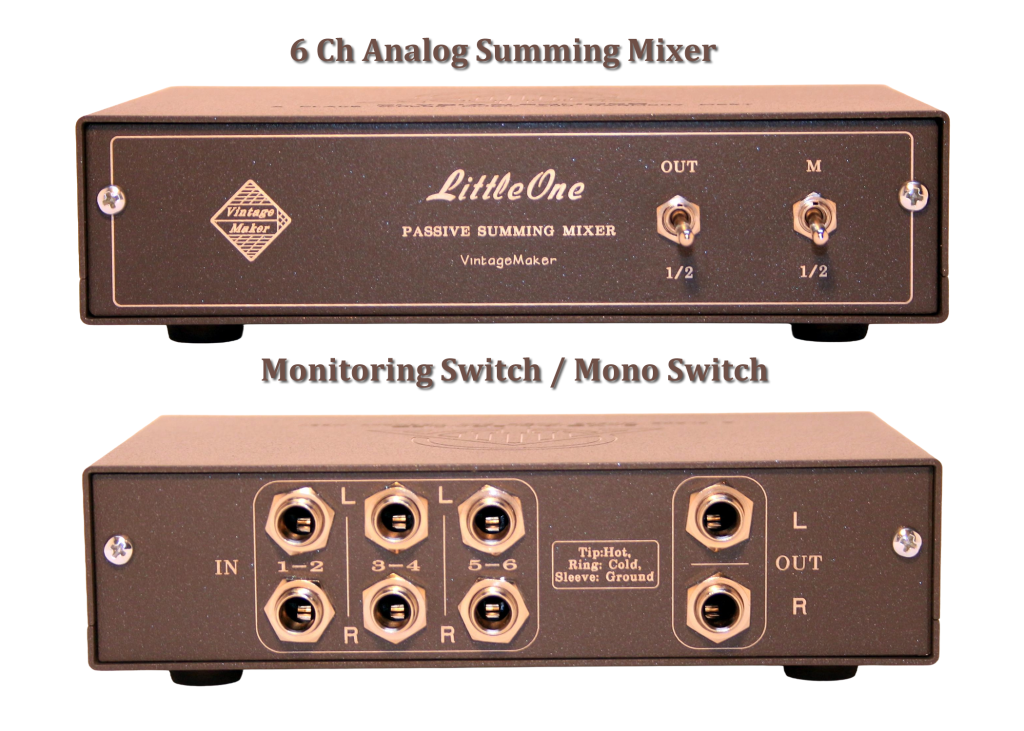
4–8 Channel Configuration Overview
| Input Channels | 4 / 6 / 8 (custom configurable) |
| Summing Topology | Floating Differential Bus – fully balanced, isolated ground. Unbalanced sources accepted |
| Resistor Network | Vishay Dale precision, military-grade |
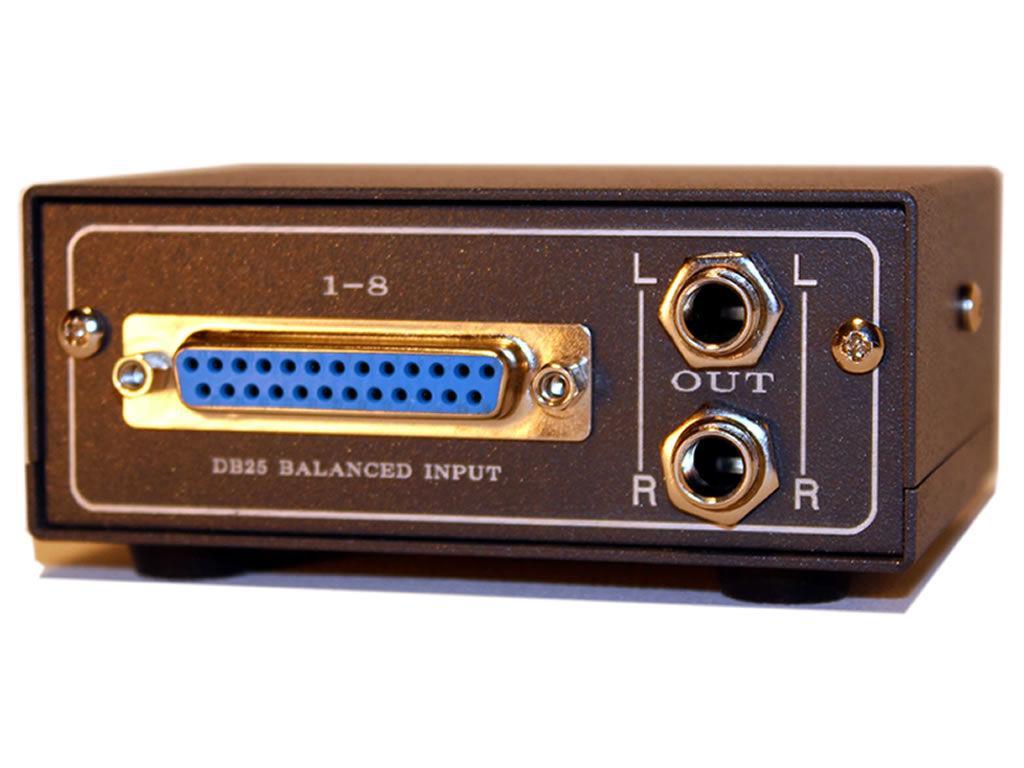
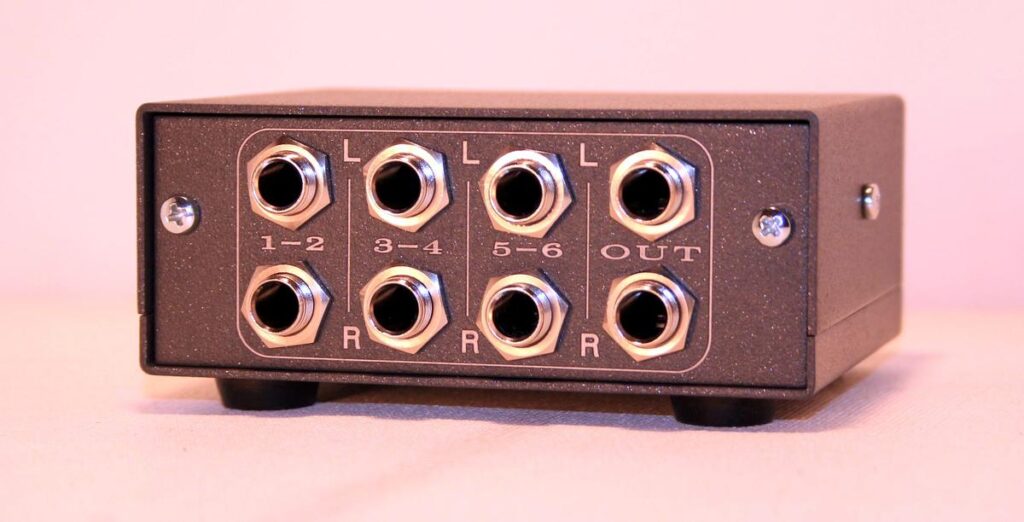
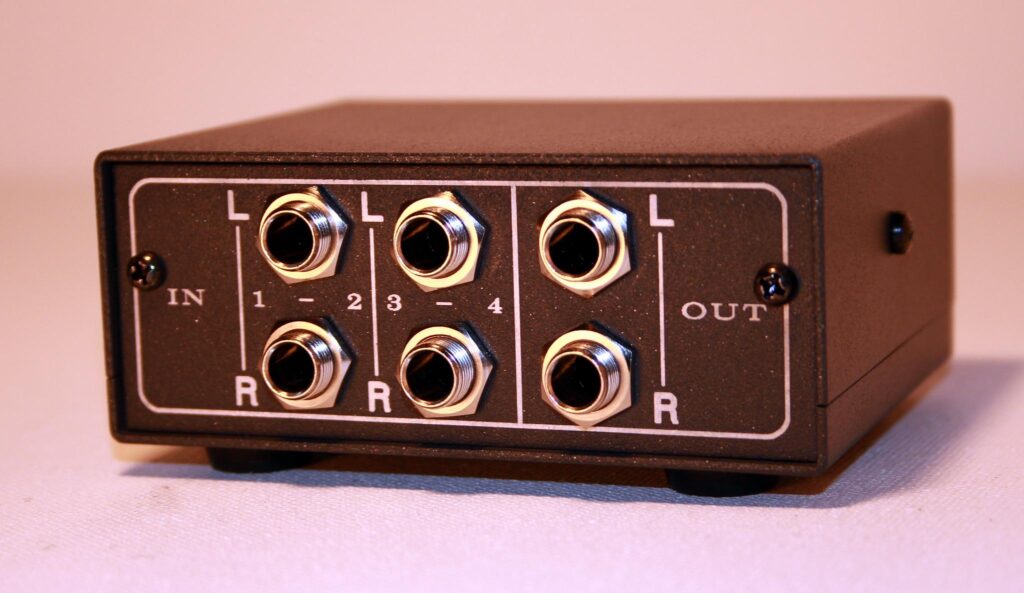
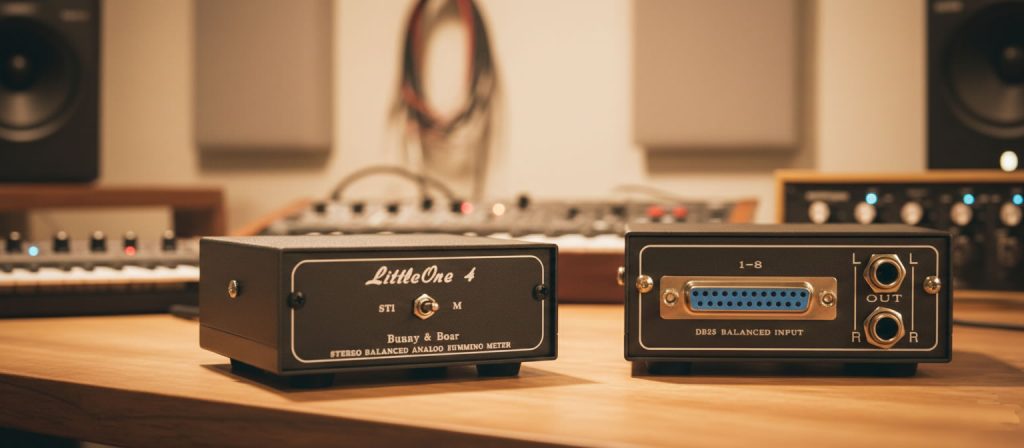
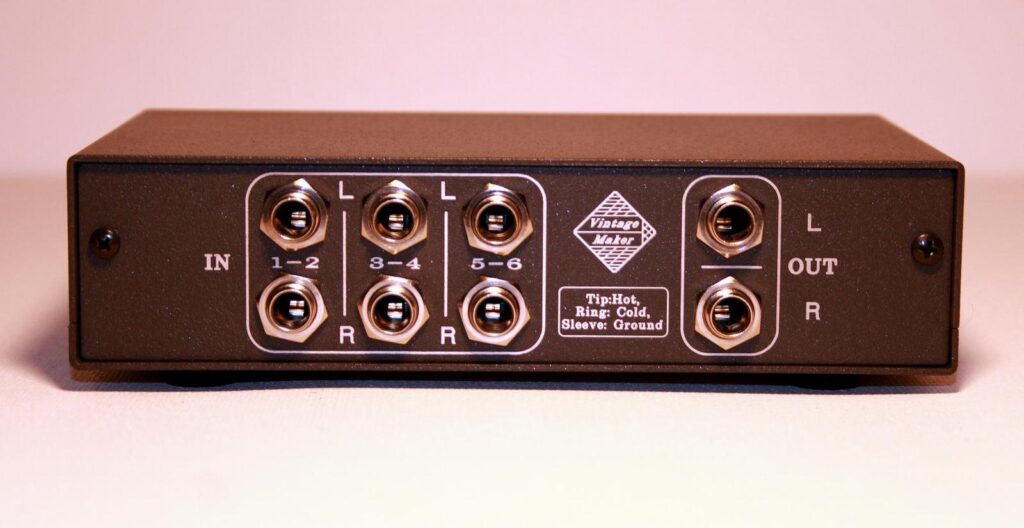
| Connectivity specify when ordering | Balanced TRS or DB-25 (D-Sub) |
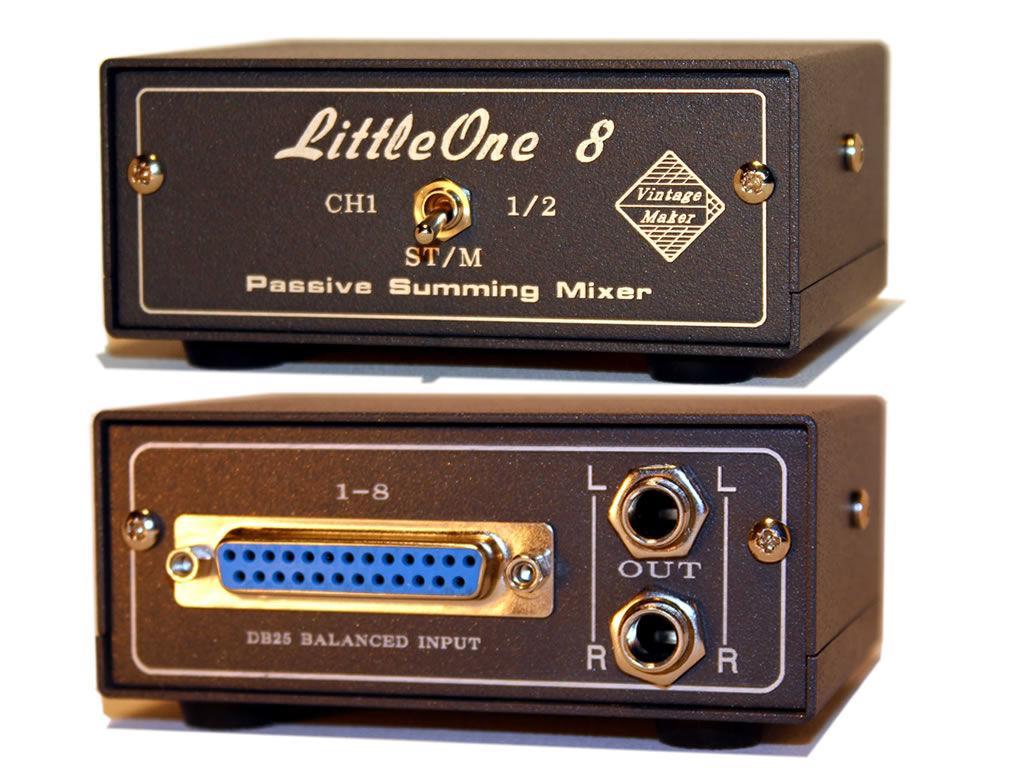
| Mono Function | Optional per-channel or stereo-to-mono switching |
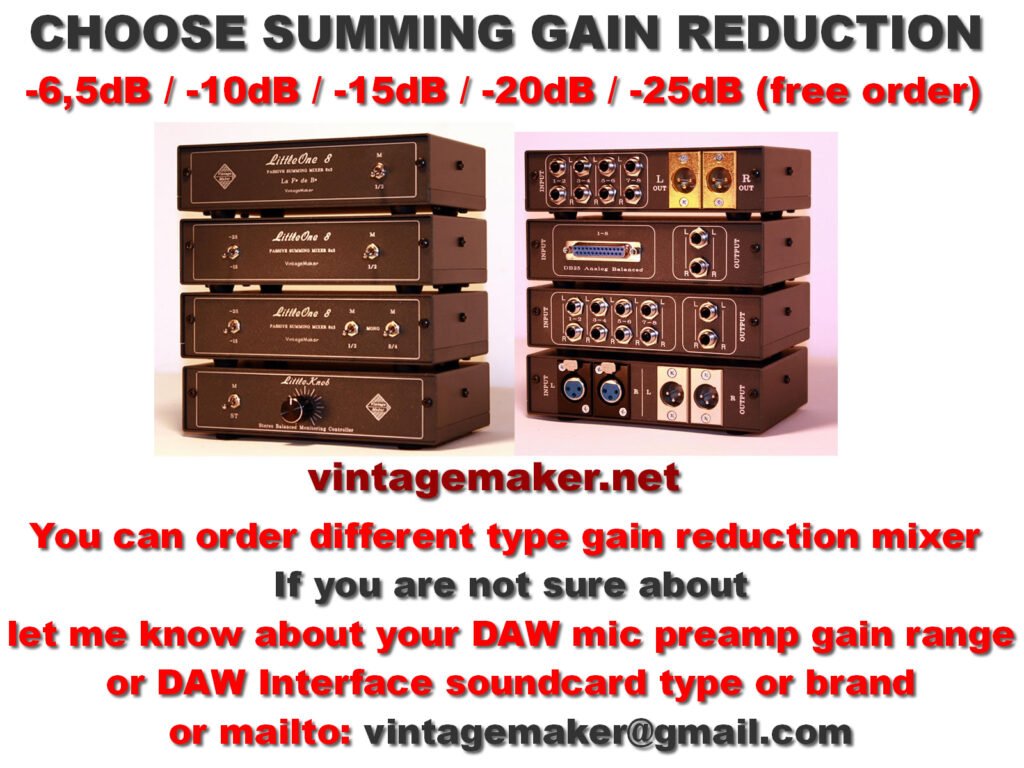
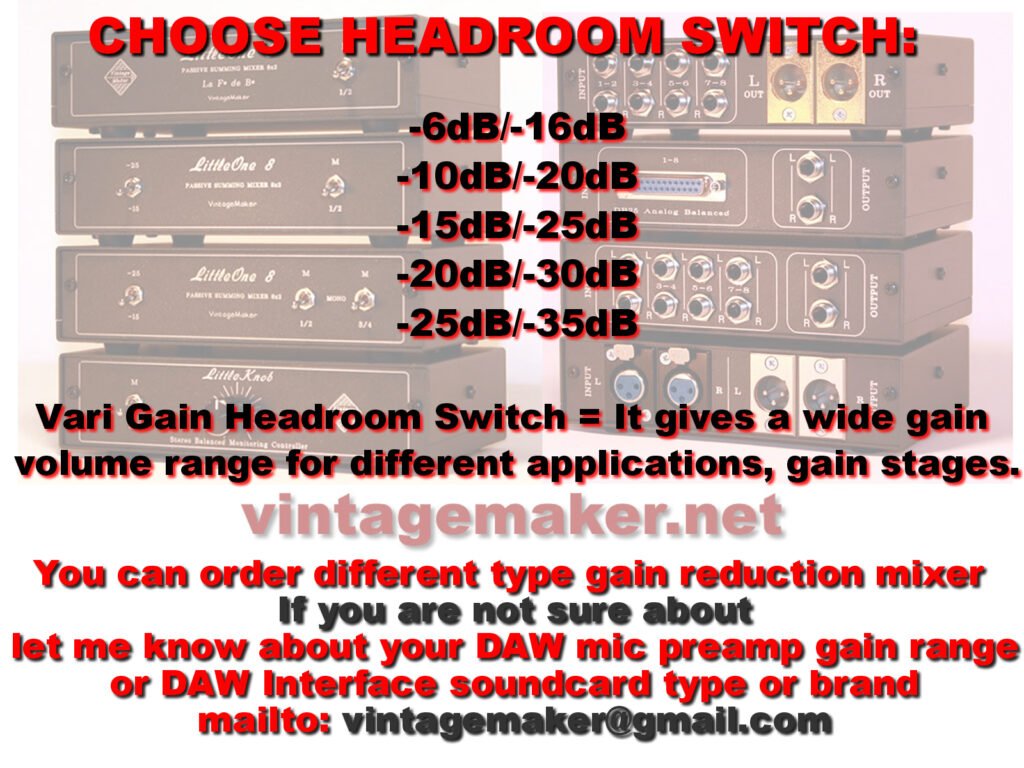
| Variable Headroom Gain Switch | Selectable configurations: -6/-16 dB, -10/-20 dB, or -15/-25 dB |
| Summing Bus Attenuation | Available in -6, -10, -15, -20, or -25 dB steps |
| Power | Fully passive – no external power required |
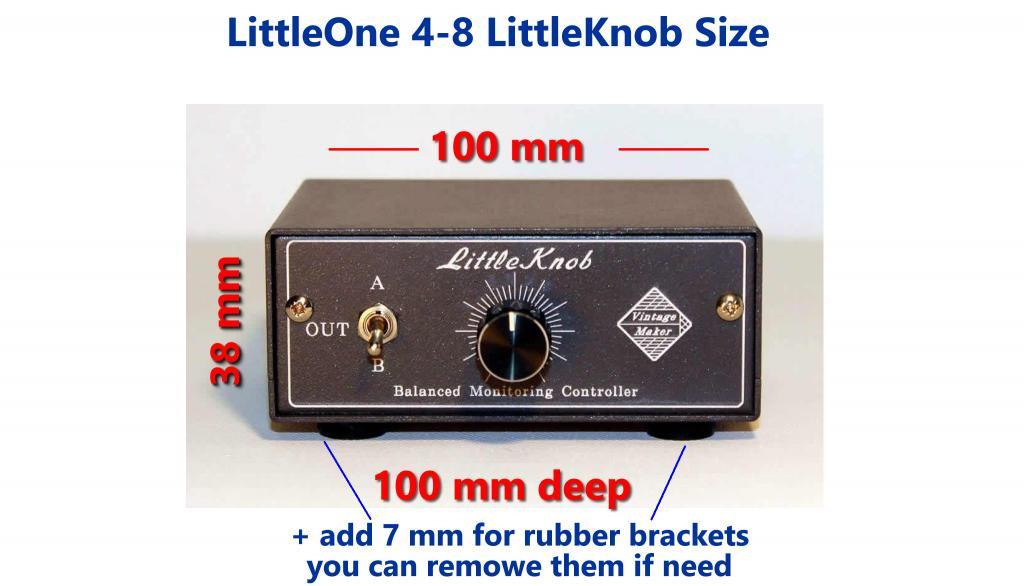
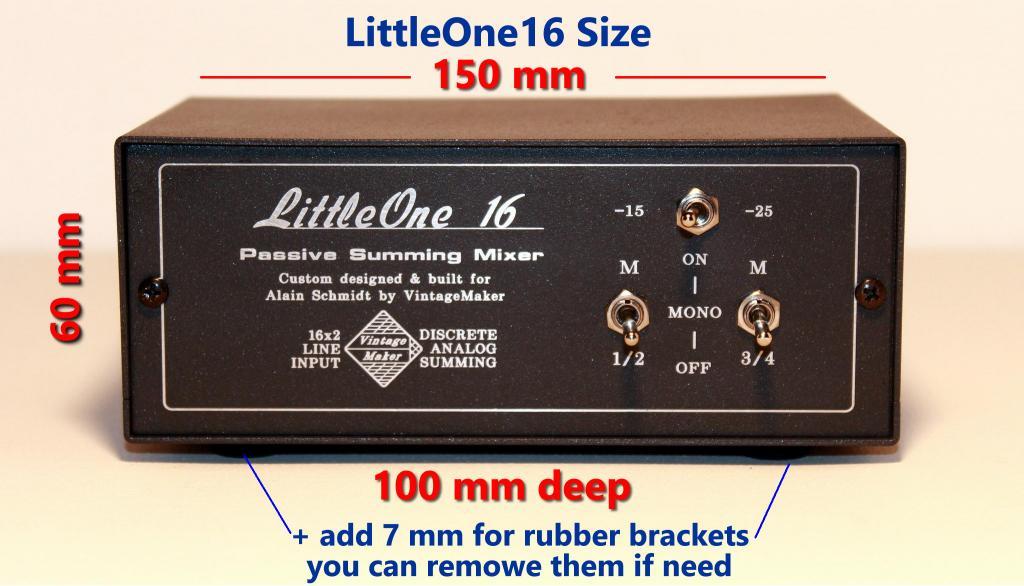
| Format | Desktop – 100 × 38 × 100 mm (4 × 1.5 × 4 in) |
| Build Time | 10–16 working days after configuration approval |
| Origin | Handcrafted in EU since 2010 |
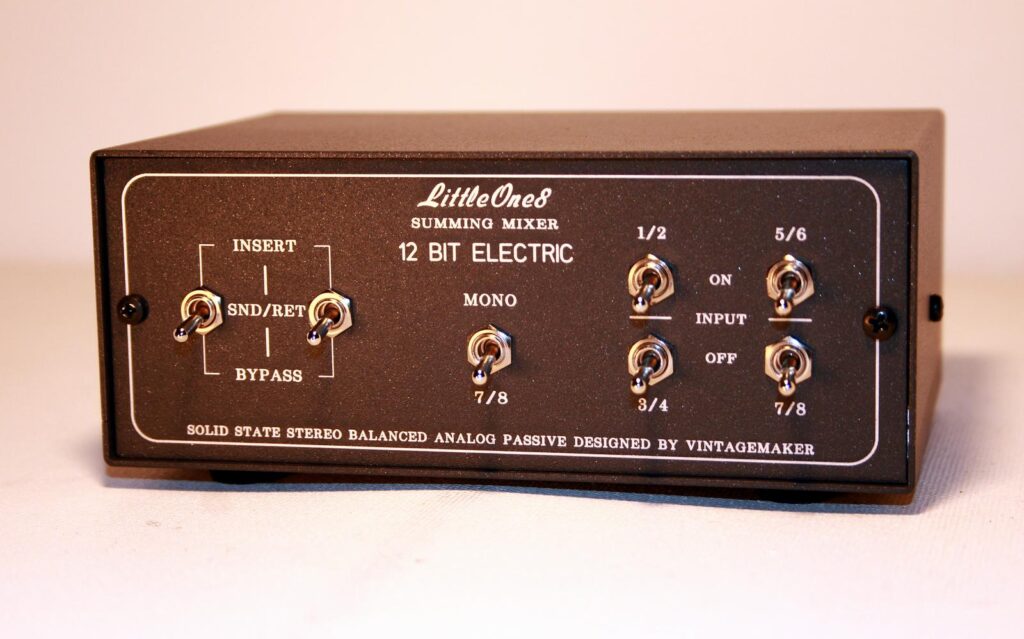
Ideal Workflows for the 4–8 Channel Configuration
- Compact desktop studios – high-end analog summing without sacrificing desk space
- Home studio stem mixing – routing 4–8 group buses through hardware for analog depth
- DAW and software synth workflows – adding warmth and dimension to digital oscillators
- Drum machine summing – combining individual outputs into a cohesive analog group
- Mobile and hybrid rigs – analog summing in setups where rack space is unavailable
- Turntables, phono stages, and external line-level sources
- Master bus and 2-bus stem mixing for final mix processing
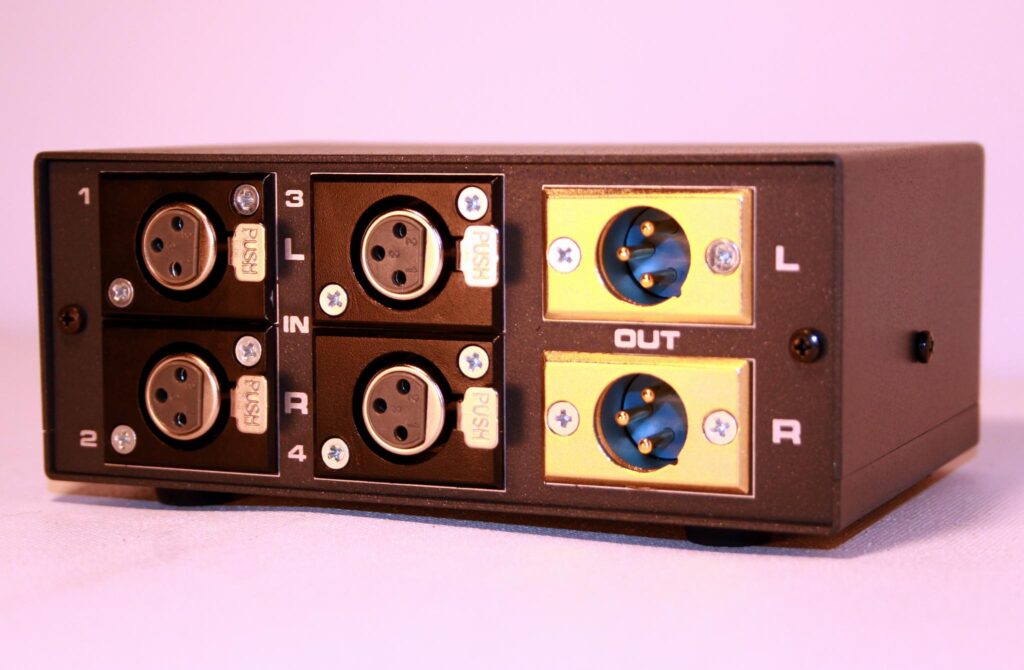
Compatible Interfaces
The LittleOne Mini works with any audio interface that has true balanced stereo outputs. Each unit is calibrated for your specific interface. Common compatible models include:
- Focusrite Scarlett 6i6, 8i6, 18i20 – 3rd Gen and later
- PreSonus Studio 24c, 68c, 1824c
- Audient iD14, iD22, iD44
- MOTU M4, M6, UltraLite, 828
- Universal Audio Apollo Twin, Solo, Duo
- RME Babyface Pro, Fireface UCX, Fireface 802
- Behringer UMC series, ADA8200
- Steinberg UR series, Apogee Duet, Quartet
- Don’t see your interface? Provide your model when ordering and the unit will be built and calibrated precisely for your system.
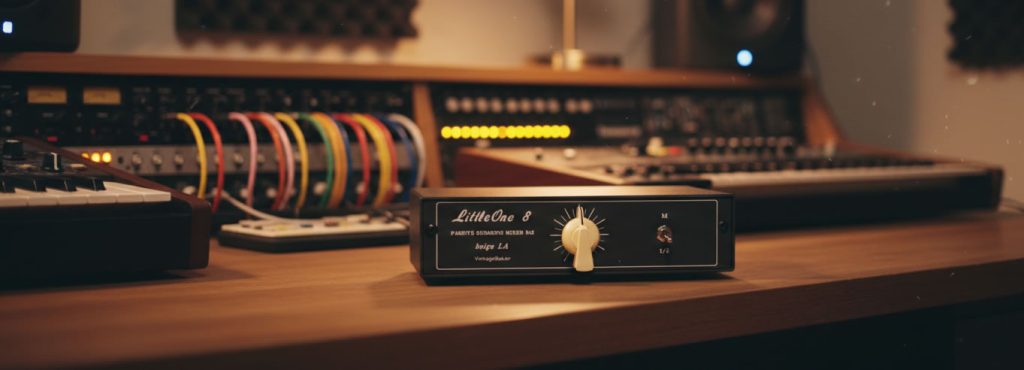
What Engineers Say About the LittleOne Mini
Exactly what im looking for
“Running my drum bus and dense synth stacks through the LittleOne Mini, the mix immediately opened up and started to breathe in a way digital bouncing never did. The separation, depth, and natural layering were obvious. I’m now using fewer plugins and far less corrective EQ.” – Paul Stanford
Quiet and wide
“The noise floor is impressively low—essentially inaudible in real-world use. What surprised me most was the stereo image: the mix became wider, deeper, and more stable from the very first session. It delivers results you normally expect from much more expensive analog gear.” – John Mc. Horovitz
When the LittleOne Mini May Not Be the Right Tool
When you have only a single stereo source, passive summing offers no real benefit, as its advantages come from the interaction of multiple channels—typically from 4 and above.
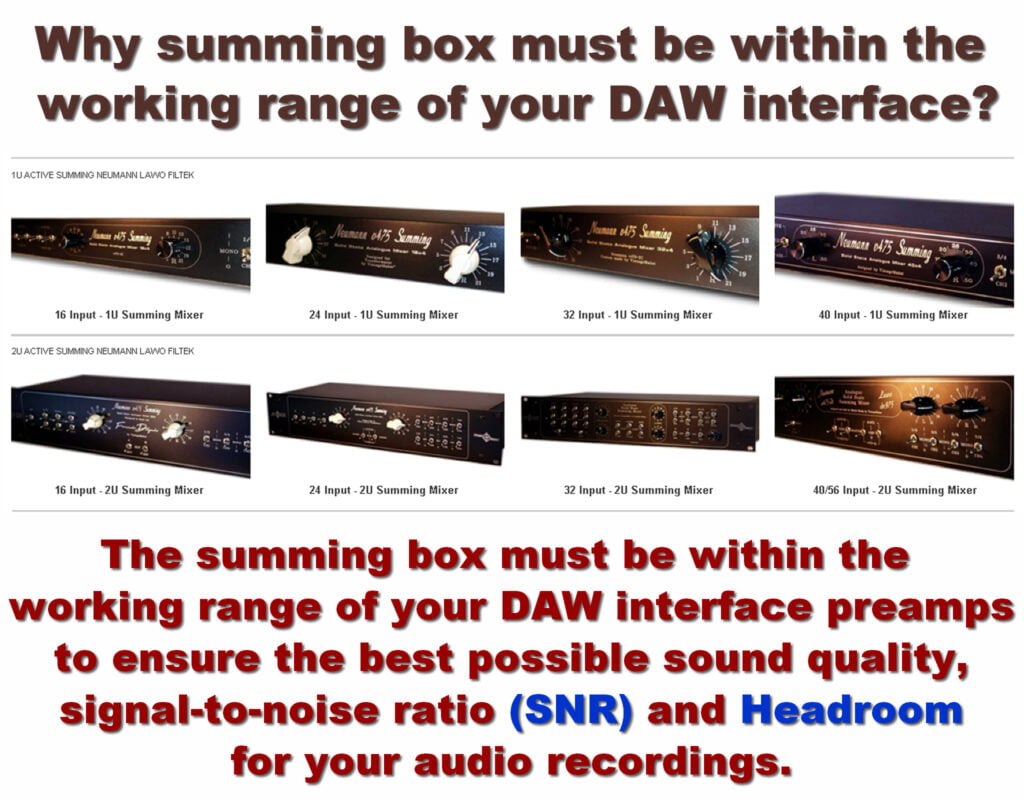
For a single stereo source, a dedicated analog color stage, such as a transformer-based line amplifier (Neumann, Filtek, or SSL-style), is the more appropriate solution. Explore our analog color and line amplifier solutions to find the best match for your studio.

Frequently Asked Questions – LittleOne Mini
What is the minimum channel count before analog summing makes a difference?
Four channels. With fewer than four inputs active, there isn’t enough bus interaction to create the harmonic depth and stereo widening that define analog summing. The LittleOne Mini’s 4–8 channel range is where these effects become clearly audible.
Does the LittleOne Mini summing work with UAD Apollo Twin, Focusrite Scarlett, and Audient interfaces?
Yes. The LittleOne Mini is compatible with UAD Apollo Twin (Solo, Duo, X), Focusrite Scarlett (6i6, 8i6, 18i20), and Audient (iD14, iD22, iD44) interfaces. Each unit is individually calibrated to your specific interface’s output level and mic preamp gain structure
What cables do I need to connect the LittleOne Mini?
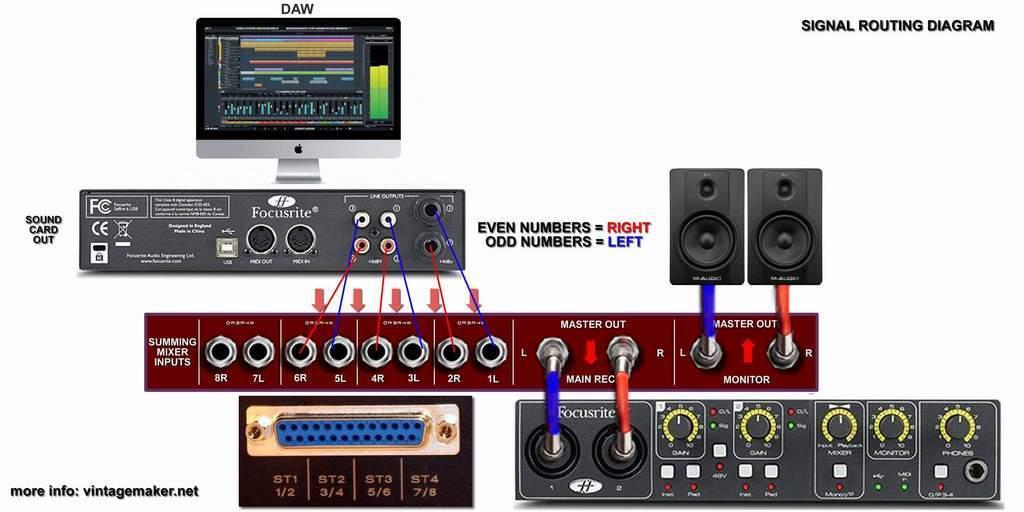
All connections are balanced TRS 1/4″ (6.35 mm jack) or D-Sub DB-25, depending on the connector configuration chosen at order. Both balanced and unbalanced sources are accepted — balanced operation is recommended for optimal noise rejection.
Do I need external mic preamps, or is my interface sufficient?
Your interface’s built-in mic preamps are sufficient. Each LittleOne Mini summing is calibrated to your interface’s preamp gain range, ensuring the passive network’s attenuation is matched to what your preamps can recover. No additional external preamps are required unless you want to add specific tonal character from a transformer-based or tube design.
Can I upgrade to more channels later?
Planning to add more channels later? Order a larger configuration now (e.g., 8 channels) and use only what you need initially (e.g., 4 channels). Unused inputs stay silent – no noise, no interference. The LittleOne’s design ensures empty channels don’t affect the ones you’re actively using.
Can I order a 6-channel configuration?
Yes. The LittleOne Mini is available in any configuration between 4 and 8 channels – including 6 inputs. Specify your exact channel count when ordering.
What is the build and shipping time?
10–16 working days after configuration is confirmed. Each unit is built and calibrated to order. Rush build options are available on request
Technical Summary & Performance Specs
The LittleOne Mini uses the same Floating Differential Bus architecture as larger VintageMaker systems, delivering professional bus interaction in a compact passive format.
- Interface-Specific Calibration: Precision-engineered to match the I/O voltage and impedance of your specific interface — Apollo Twin, Babyface, Scarlett, or similar — ensuring optimal gain staging and low noise floor.
- Phase-Coherent Summing: Isolated-ground topology eliminates ground loops and preserves absolute phase integrity for a stable center image and consistent stereo width.
- Precision Signal Path: Built with precision-selected Vishay Dale resistors at 0.1% matching accuracy for transparency and transient detail.
- Fully Passive: No power supply, no electronic noise floor — pure signal path from DAW output to makeup gain stage.
Order & Configuration