Rackmount Studio Audio Line Switchers
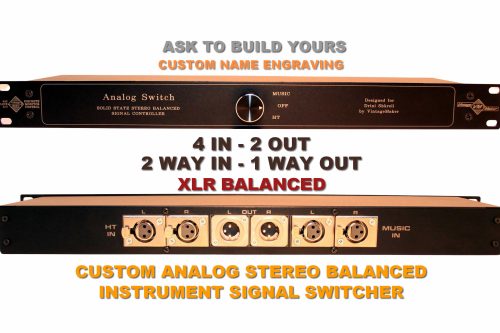
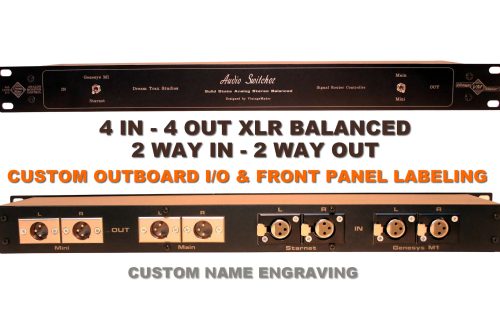
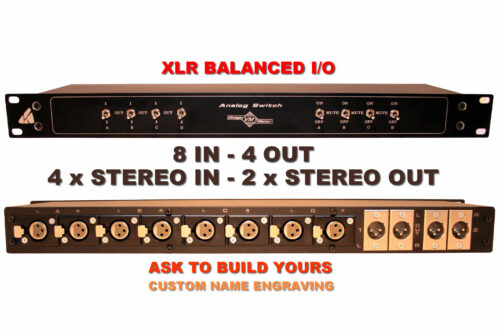
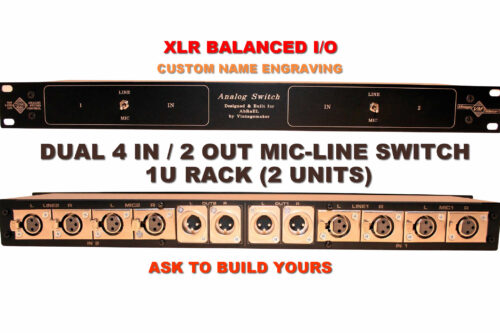
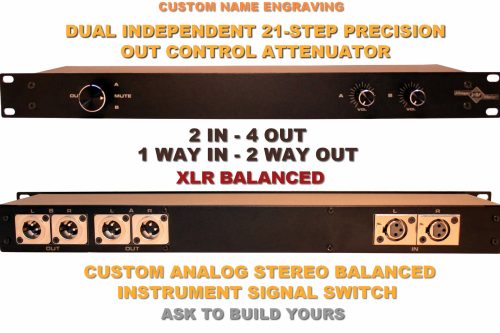
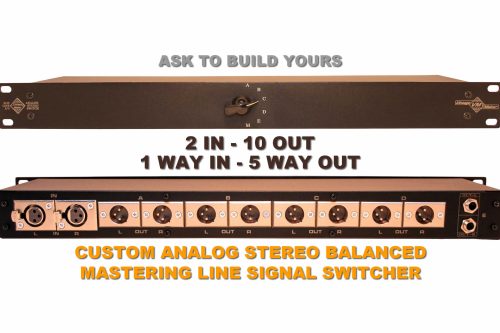
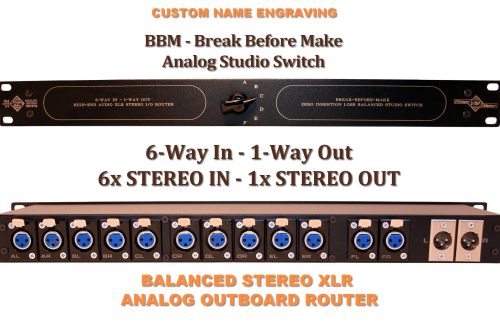
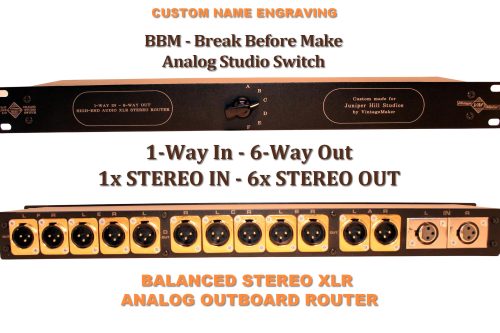
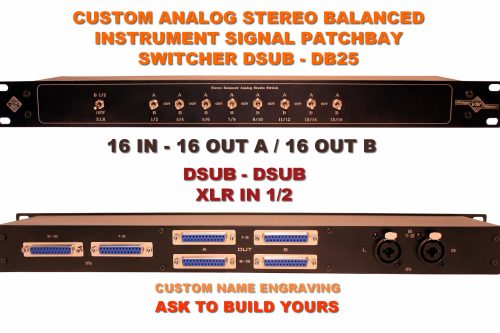
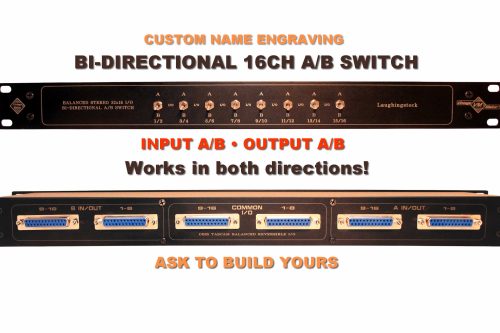
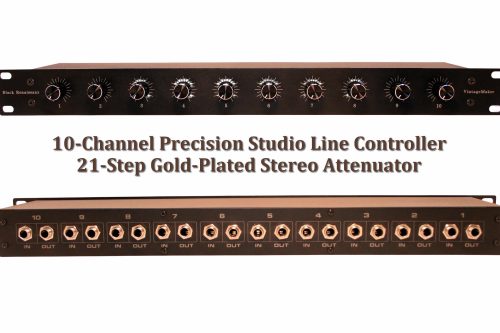
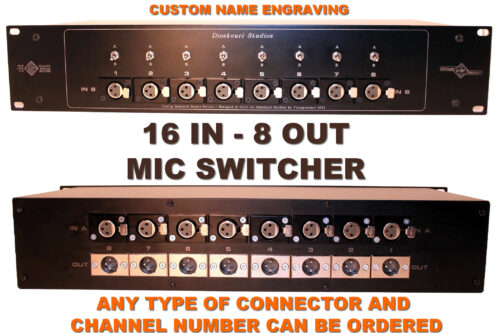
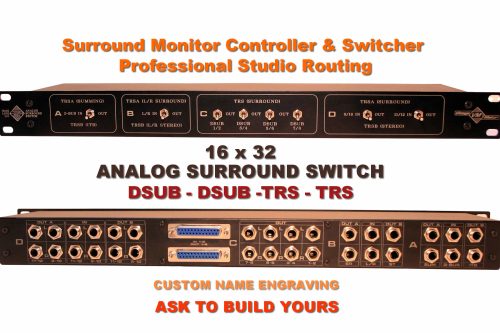
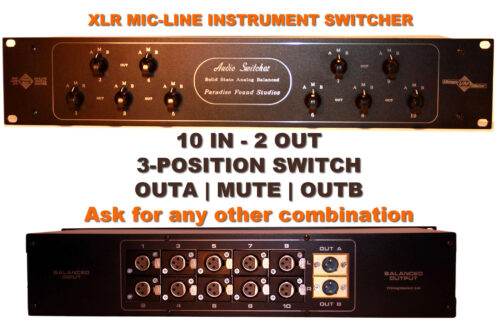
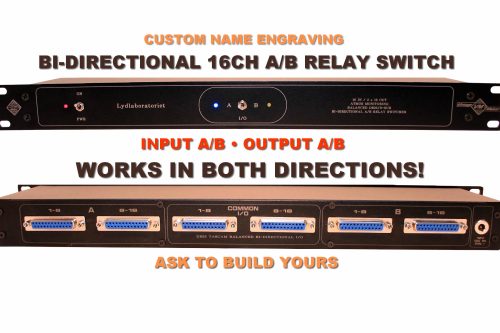
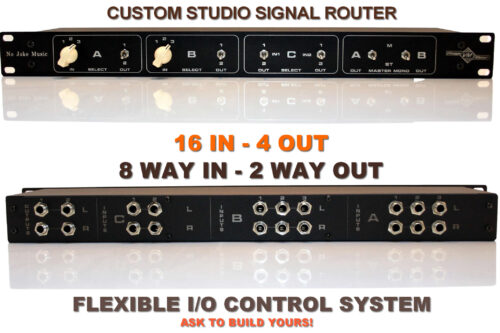
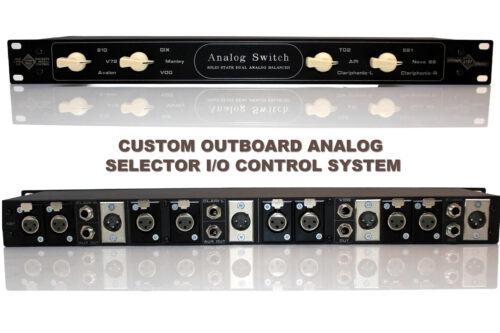
A rackmount audio line switcher lets you route balanced audio signals between multiple sources and destinations without unplugging cables — all from a 19-inch rack panel. One unit handles monitor switching, source selection, or outboard routing with instant front-panel control, while all connections remain permanently wired.
Unlike desktop switchers, a rack switcher integrates directly into your studio rack infrastructure — sitting alongside your interfaces, preamps, and patch systems in a single organized rack.
Key Features
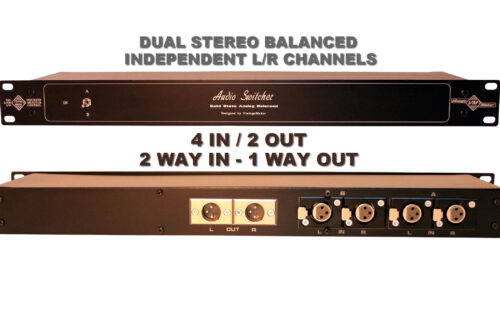
▸ Fully balanced dual-stereo signal path
Designed for professional rack-based studio equipment with balanced connections.
▸ Zero crosstalk — isolated left and right signal paths
No electrical relation between L and R sides. The stereo image passes through unchanged.
▸ Does not affect stereo image
Passive switching with no shared circuitry between channels — what goes in comes out.
▸ Passive balanced signal routing
No active circuitry, no gain stages, and no power supply in the signal path.
▸ Flexible studio routing
Switch between monitors, sources, or outboard processors without repatching cables.
▸ Multiple switching topologies available
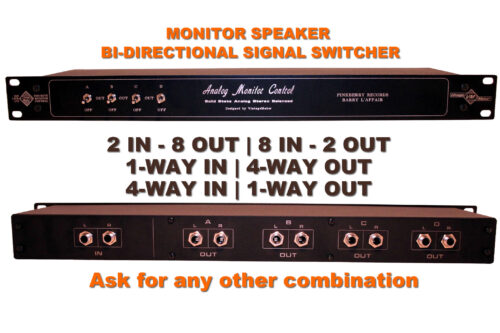
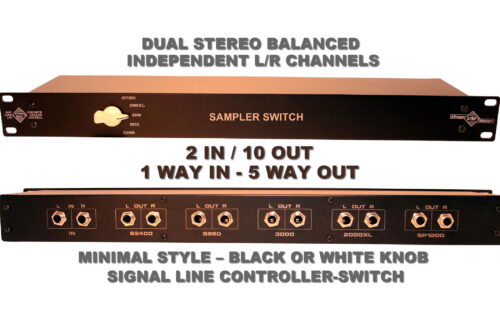
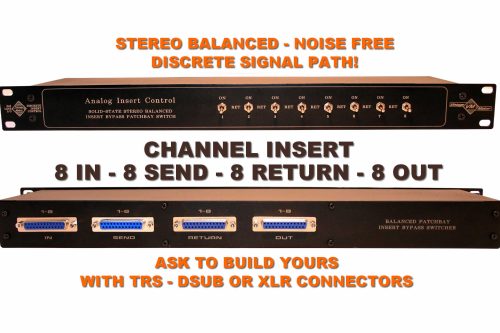
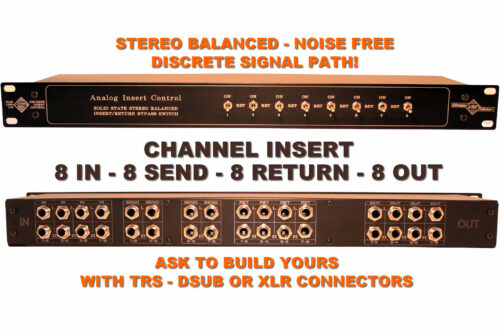
Monitor switching, source selection, insert switching, and custom routing configurations.
▸ 19-inch rackmount format
Integrates cleanly into any standard studio rack alongside interfaces and outboard gear.
▸ Handbuilt studio hardware
Each unit is assembled to order with high-quality components and durable switching hardware.
When Do You Need a Rackmount Audio Switcher?
In a rack-based professional studio, a line switcher solves a common workflow problem: you have more sources and destinations than you want to manually reconnect between sessions. Common applications include:
▸ Multiple monitor systems
Switch between near-field, mid-field, and far-field monitors instantly during mixing.
▸ Several audio sources feeding one monitor chain
DAW outputs, tape machines, hardware synths, and reference players — all permanently connected, instantly switchable.
▸ Outboard gear comparison
Insert or bypass compressors, EQs, and tape processors in the signal chain without repatching.
▸ A/B signal comparison
Compare processed vs. dry signals, two mixes, or two signal chains instantly.
▸ Reducing cable wear
All connections remain permanently wired — no connector wear, no grounding problems from repeated patching.
Custom Configurations Available
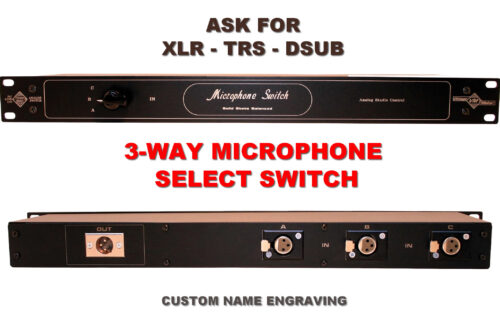
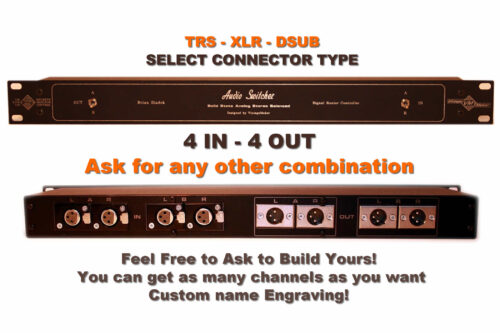
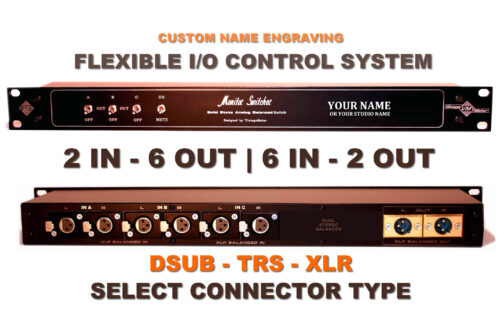
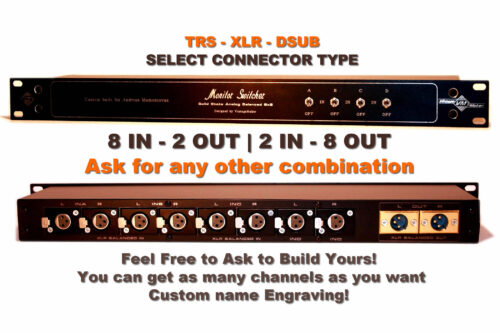
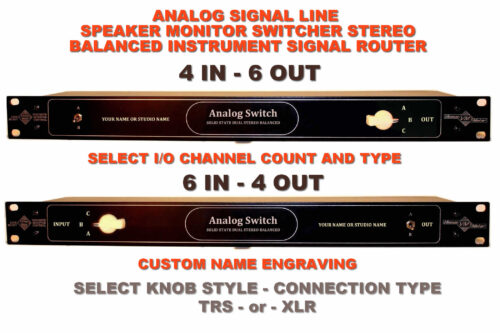
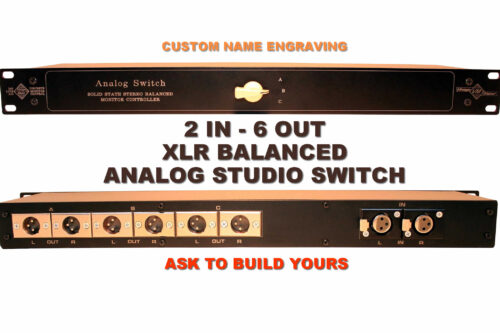
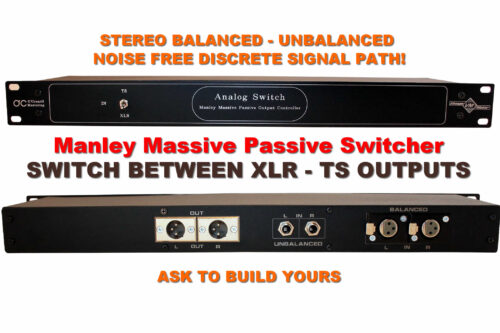
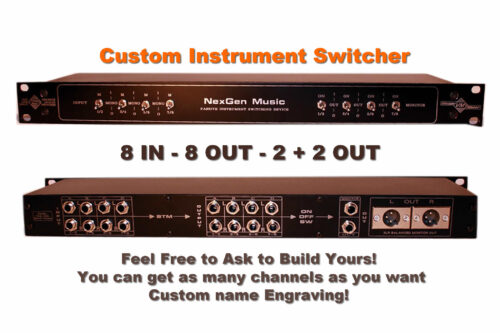
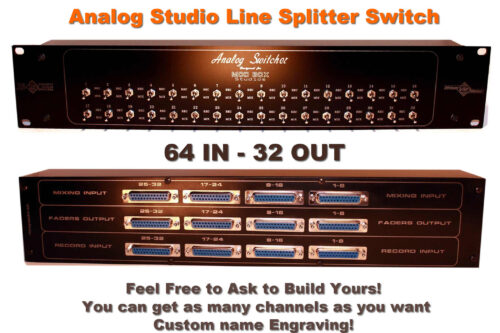
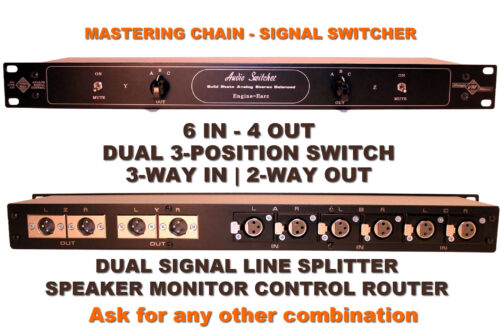
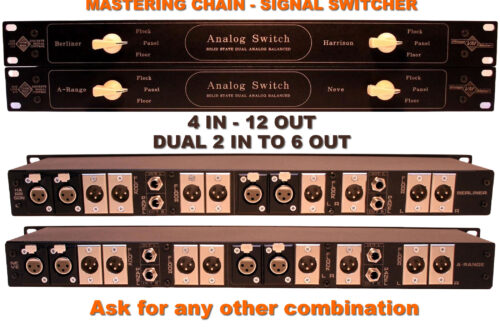
Don't see the exact configuration you need? Every VintageMaker rackmount switcher is handbuilt to order — contact us with your requirements and we'll build it to your exact studio specifications.
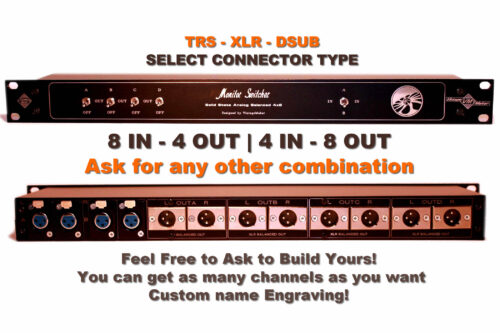
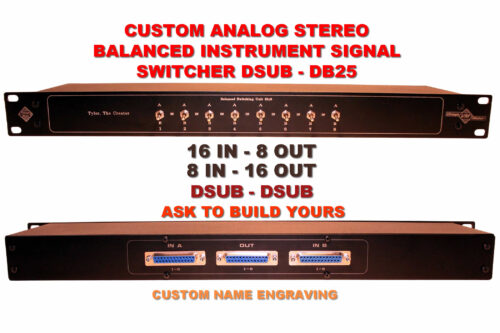
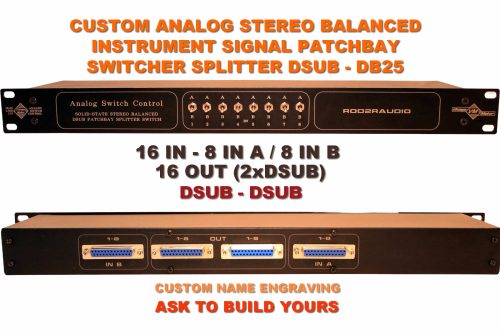
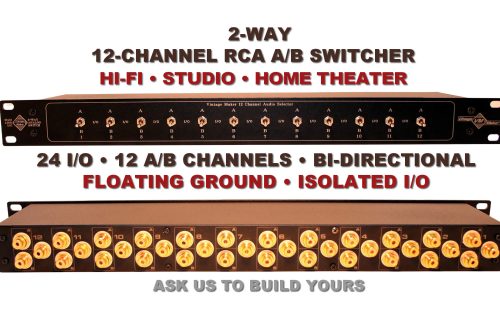
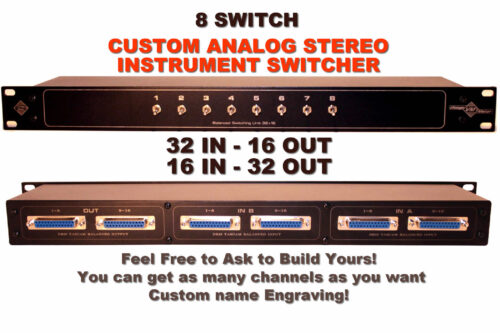
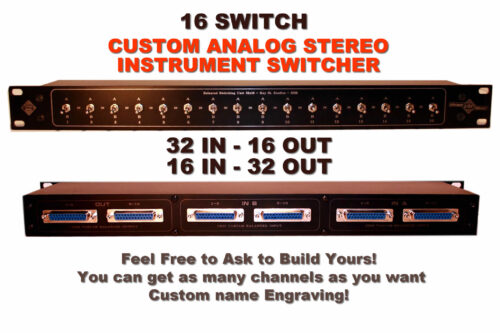
▸ Any combination of inputs and outputs (2–16 channels)
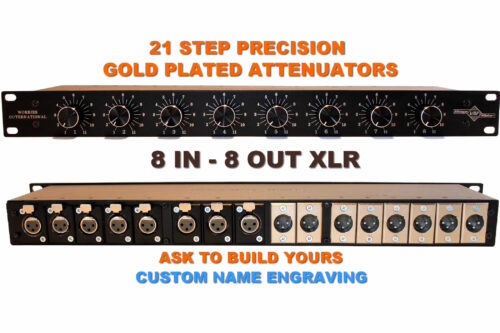
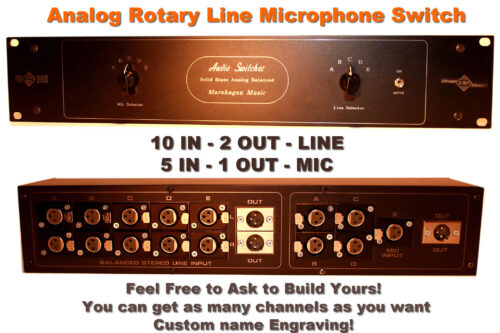
▸ TRS, XLR, RCA, or DB25 Tascam connectivity
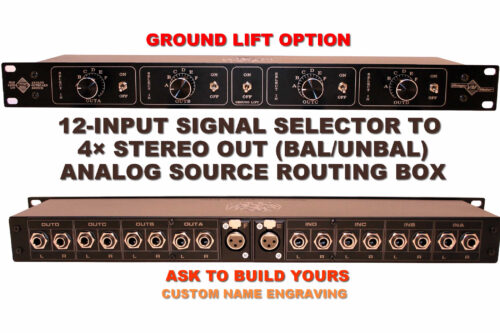
▸ Optional switches: mute, mono, phase invert, stereo flip, ground lift
▸ 1U or 2U rackmount format
▸ Custom front panel engraving with studio name or labels
Every rack switcher is hand-assembled in the EU using fully balanced point-to-point wiring, military-grade rotary switches, and high-quality components. No stereo crosstalk design — no electrical relation between L and R sides. Each unit is individually tested before shipment. 15+ years of engineering expertise.
Frequently Asked Questions
Will a passive rackmount switcher affect my audio quality?
No. A passive switcher introduces zero noise, zero distortion, and no frequency response changes. There is no active circuitry in the signal path — the signal passes through nothing but high-quality switching components.
What is the difference between a rackmount switcher and a desktop switcher?
The signal path and switching function are identical. The rackmount format integrates into a 19-inch studio rack alongside interfaces and outboard gear. The desktop format sits on a studio desk or meter bridge. Choose rackmount if your studio is rack-based, desktop if you work at a desk-based setup.
Can I use this with balanced XLR monitors?
Yes. Available in TRS, XLR, RCA, or DB25 configurations — built to match your monitor and source connectivity.
What is the difference between a rackmount switcher and a rackmount monitor controller?
A rackmount monitor controller includes volume control, mono check, and phase invert functions alongside switching. A rackmount audio line switcher handles signal routing only — no volume attenuation, no active monitoring tools. If you need volume control with your switching, a rackmount monitor controller is the right choice.
Will this work with active studio monitors?
Yes. Compatible with all professional active monitors using balanced line-level inputs — Yamaha, Genelec, Neumann KH, Focal, Adam Audio, JBL, KRK, PreSonus, and others.
Related Studio Gear
Need a Custom Rackmount Switching Solution?
Custom connector types, input/output count, optional switches, 1U or 2U format, and front panel engraving — contact me and I'll build it to your exact studio specifications.
Request Custom Build