
Analog Summing vs. Summing Plugin: The Physics of Headroom and Depth
Already familiar with how analog summing works? Jump straight to the comparison below. New to the topic? Start with our complete guide: How Analog Summing Creates Depth, Warmth & Headroom →
Beyond the Summing Plugin: Understanding Physical Signal Density
In the modern hybrid studio, the choice between In-The-Box (ITB) and Out-Of-The-Box (OTB) mixing is a matter of technical optimization. While a summing plugin can effectively model harmonic saturation, there is a fundamental difference between mathematical accumulation and physical electrical summing.
As an engineer, you know that digital summing is an error-free addition of samples. It is transparent and precise. However, it lacks the non-linear response that defines the “analog sound.” To understand why hardware remains a staple in professional mastering and mixing, we must look at how circuits handle high signal density.
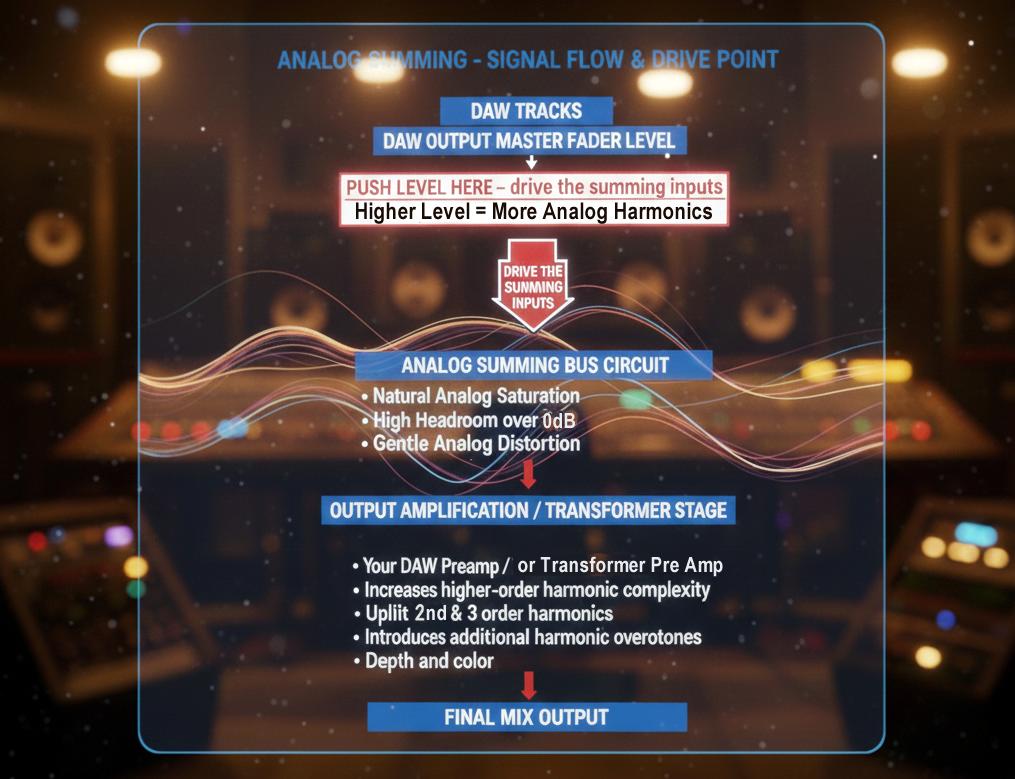
Why a Plugin Can’t Fully Replace Physics
Industry leaders like Universal Audio (LUNA) and Waves (NLS) offer incredible summing emulations to add harmonic character. However, they cannot change the fundamental way your DAW handles peak energy at the final stage.
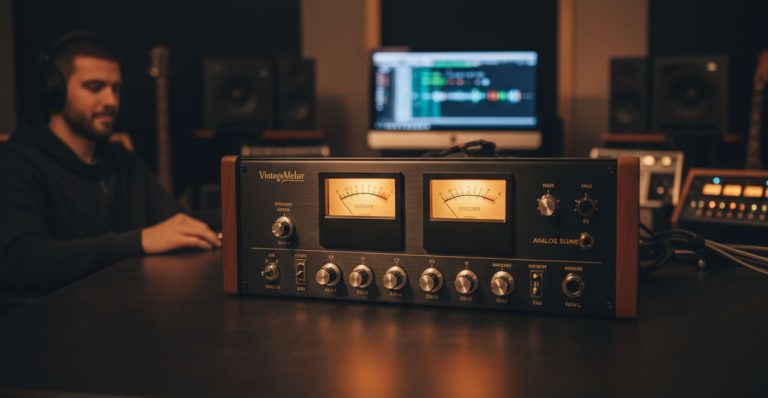
In a digital mix, the software adds samples together with mathematical perfection. It’s clean, but it has a fixed ceiling. Analog summing mixers behave differently. When you drive multiple channels into a VintageMaker summing bus, the physical components react to the voltage limits, entering soft saturation instead of hard clipping.
Comparison: Digital Emulation vs. Analog Hardware
| Feature | Summing Plugin (ITB) | Analog Summing Mixer (OTB) |
| Summing Process | Mathematical (Linear addition) | Physical (Voltage & Current) |
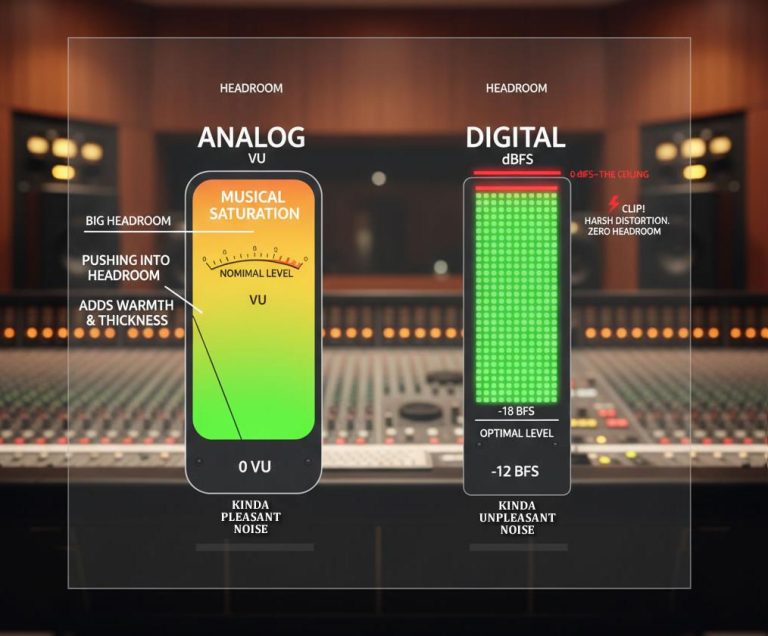
| Headroom | Fixed (Digital 0 dBFS ceiling) | Flexible (High-voltage analog rails) |
| Peak Response | Hard Clipping (at 0 dBFS) | Soft Saturation (Natural rounding) |
| Stereo Width | Algorithmic / Digital Crosstalk | Organic (Physical component interactions) |
| High Channel Count | Can feel slightly flat with many tracks | Maintains depth and “breathing” space |
| Workflow | Total Recall / Instant | Hybrid / Requires D/A & A/D |
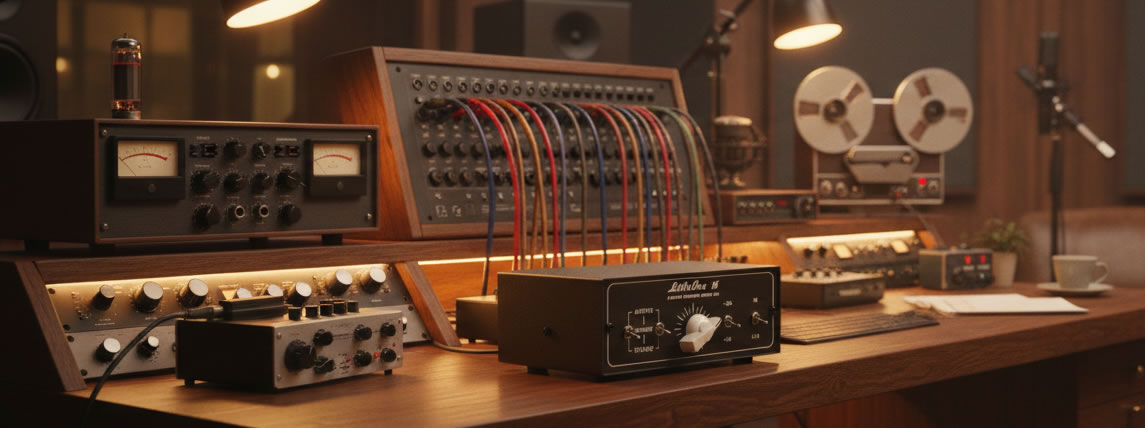
The Hybrid Mixing Strategy: The Best of Both Worlds
The goal isn’t to replace your DAW—it’s to enhance it. Many producers now follow a hybrid optimization workflow:
- Digital: Precision, total recall, and full control from your DAW. Use a summing plugin on individual group tracks to add specific character and localized saturation (like Slate Digital VCC).
- Analog: Adds interaction, analog warmth, depth, and musical harmonic character. Send those groups to a VintageMaker summing mixer for the final summation to ensure that the integration of signals benefits from real voltage headroom and physical harmonic glue.

Does analog summing really make a difference?
Yes — but not because analog is magically better. It’s pure physics.
Digital mixing is perfectly linear and mathematical, while analog summing is a physical process. When multiple channels drive the bus, the hardware introduces micro-nonlinearities such as low-order harmonics, subtle phase interactions, and gentle peak rounding. Unlike a DAW, the analog bus doesn’t hit a hard ceiling at 0 dBFS; it enters a soft saturation zone, giving the mix a natural headroom buffer and protecting transients from harsh clipping. These effects don’t overwhelm the mix — they add cohesion, depth, and perceived width in a way that’s difficult to fully replicate with plugins alone.
Can plugins replace analog summing?
A plugin can imitate the tone of a console, but it cannot recreate the physics of signal density. In a DAW, samples are added linearly with a fixed digital ceiling. In contrast, a physical summing bus reacts to voltage and current limits. These micro-nonlinearities average out across the mix, making the output feel more “alive” and responsive to the energy of the music.
Why does analog summing not clip like digital?
Digital systems hit a “brick wall” at 0 dBFS, resulting in harsh hard-clipping. Analog hardware utilizes soft saturation, providing a “safe place” for your dynamics. Instead of shattering peaks, it gently rounds them off, generating low-order harmonics (2nd and 3rd order) that have a direct musical relationship with the fundamental note.
For a detailed explanation of how analog headroom works and why it matters, see: Analog Headroom Explained →
How does the “Analog Glue” actually work?
In digital, 0 dBFS is the absolute limit; in analog, it is merely a reference point. As you drive more level into the summing bus, the circuit naturally “glues” the channels together through soft saturation. This creates a cohesive, unified sonic field where instruments find their natural place instead of fighting for space.
Passive vs. Active Summing: Which should I choose?
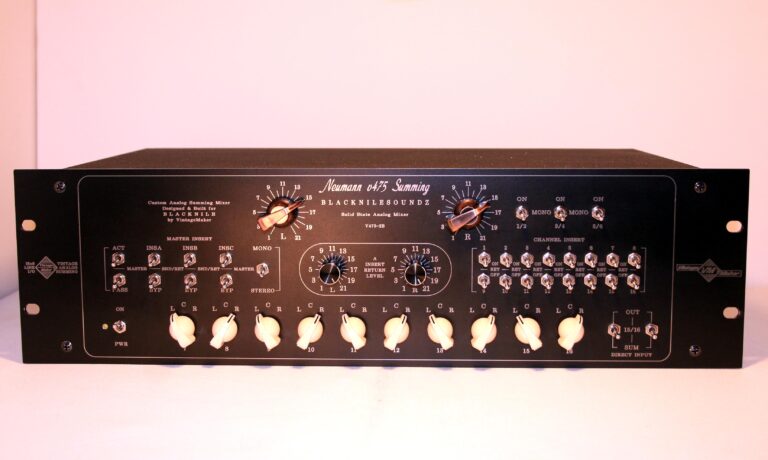
Passive Summing: The ideal choice for home studios, purists, and high-end studios alike. It offers the cleanest signal path with zero noise. Because each unit is custom-built to match the customer’s specific studio environment, it works flawlessly and without compromise with your existing DAW interface preamps. At the same time, it is the professional standard used by hundreds of Grammy Award-winning producers who pair it with various high-end external preamps (Neve, API, SSL) to achieve different color and sound characters. It gives you total control over the final harmonic texture, regardless of your setup.
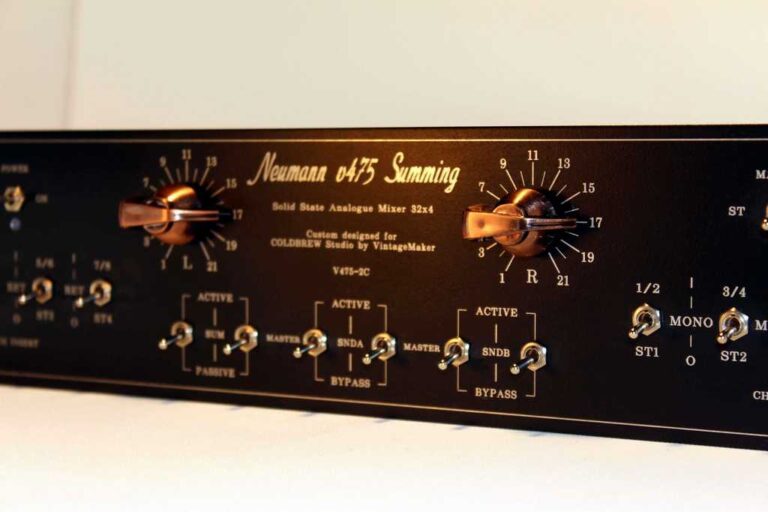
Active Summing: Features legendary built-in vintage transformers (Neumann, Lawo, Filtek). It provides “instant” analog console weight, punch, and vintage character without needing external gain recovery.
2-in-1 (Switchable):
The ultimate hybrid solution. Toggle between passive and active modes via a front-panel switch to suit any genre, giving you the best of both worlds in one box.
Can a high-end plugin like Waves NLS or UAD LUNA fully replace analog summing hardware?
No — not when it comes to headroom, which is the critical difference. Plugins like Waves NLS and UAD LUNA model harmonic saturation with superb and effective results, but they operate entirely within the fixed digital ceiling of your DAW. They cannot replicate the real analog headroom created by a passive resistor summing network when you push its summing inputs, because that safe zone exists only in actual physical circuitry, not in an algorithm.
What is signal density and why is it important?
Signal density refers to the cumulative energy from multiple channels summed together. In analog, as more channels drive the summing bus above nominal, components react physically — creating musical compression, harmonic bloom, and the characteristic density of analog mixes. In digital, adding more channels only increases the numeric sum with no physical response.
Is analog summing worth the investment for a project or home studio?
For producers with strong in-the-box skills who want to take mixes further, analog summing provides a physics-driven upgrade: more stereo depth, better instrument separation, and the ability to shape tone through gain staging rather than extra plugins. The workflow is simple: connect stems, route the stereo return, and print. Improvements are immediate. Beginners are advised to master DAW fundamentals first, but analog summing can be a meaningful next step for elevating their mixes.