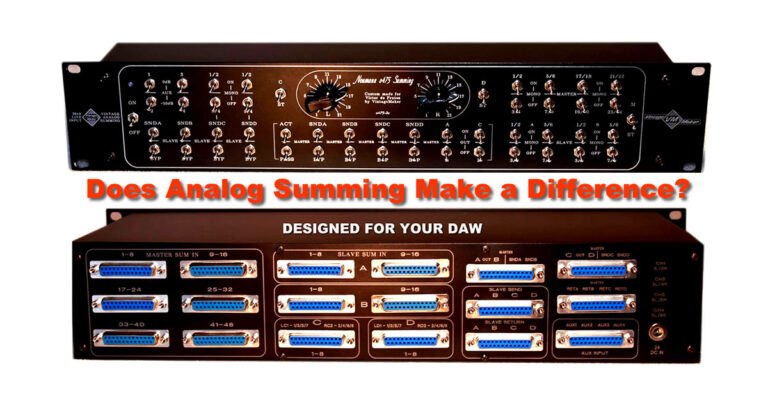

The Human Factor in Analog Summing – Mixing Process
The Human Factor in Analog Summing: Why Your Skills Unlock Pro Results
Not sure what analog summing is or how it works physically? Start here: How Analog Summing Creates Depth, Warmth & Headroom →
Why Your Skills Matter in Analog Summing
An analog summing mixer is a powerful creative tool that many engineers use to shape the character and spatial feel of their mixes. It can help enhance perception of depth, space, and musicality when used in the appropriate operating range.
However, the best results usually come from the combination of good equipment and solid production technique. Understanding gain staging, panning strategy, and signal routing helps translate the potential of analog summing into professional-level results.
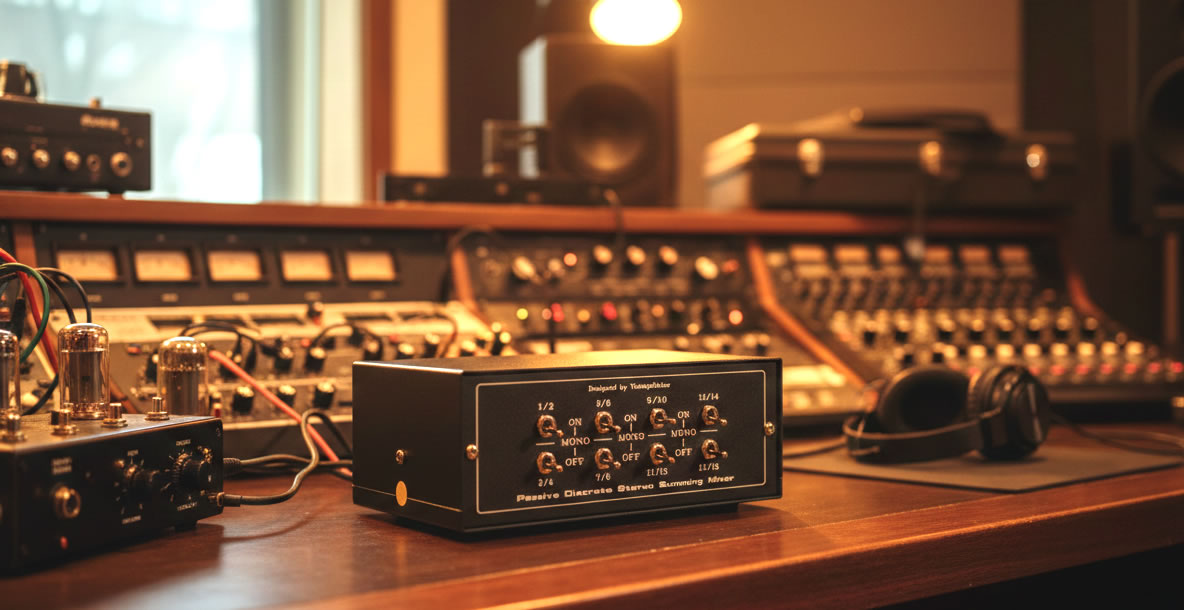
In short, great analog sound is typically the result of both the gear and the engineer’s decisions.
Even simply running a mix through analog summing can contribute to a different tonal and spatial character, but learning how analog circuits respond to level and balance adjustments helps you extract the most value from the system.
What You Need to Know
✅ How to pan with intention to take advantage of analog stereo separation.
✅ How to gain-stage properly to achieve natural headroom and gentle harmonic depth.
✅ How to prepare and balance stems consciously, knowing that analog summing reacts differently from digital workflows.
When you apply these techniques, your mix opens up, sounds more alive, and has greater depth and clarity.
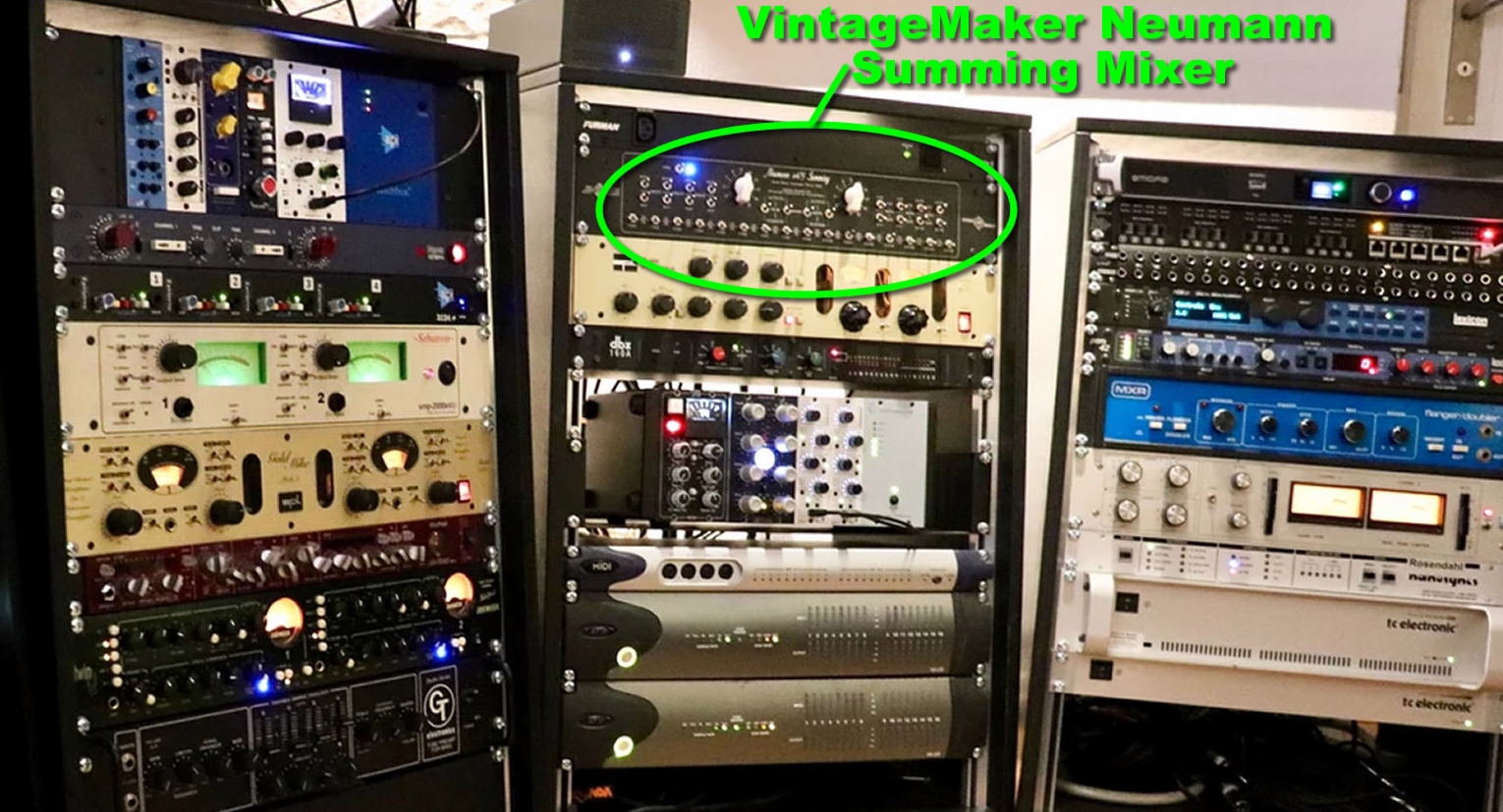
Many people believe that simply buying an analog summing mixer will magically transform their mixes — and to some extent, this “magic” is real. Even just passing your tracks through a good analog summing box will give your mix more depth, space, and air. But remember: analog summing is not the solution itself — it’s a tool in your hands.
The true potential only reveals itself when you learn how to use it properly. The more you understand the fundamentals of analog mixing — things like intentional panning, proper gain-staging, and headroom management — the more this tool will reward you with a sound that is open, dynamic, and natural.
What Happens When You Sum Analog?
Analog summing naturally adds a subtle harmonic richness, improved stereo depth, and transient definition that digital summing cannot replicate the same way. Even without transformers, tubes, or saturation circuits, passive analog summing creates more space, separation, and depth between elements.
For the technical explanation of how this harmonic behavior is generated, see: How Analog Summing Creates Warmth and Harmonics →

Why the Human Factor Is Key
To unlock the full potential of analog summing, it’s not enough to just send stems through the box and bounce the result. You need to learn how to feed the summing box properly. This is where your skills matter.
1️⃣ Pan with Intention
In the analog world, panning works differently than in-the-box. Hard and soft panning left and right can create greater physical separation between channels. This opens up space in the center and can make your mixes feel wider and clearer. The goal is to find where your instruments sit in the best position within the stereo panorama.
2️⃣ Proper Gain-Staging
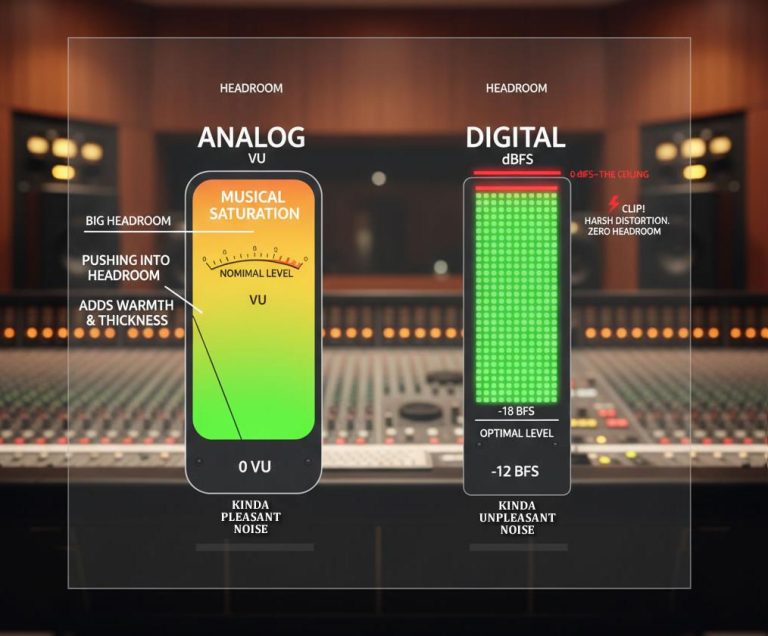
You should hit the summing mixer a bit hotter than you would in digital. Analog circuits respond musically to higher levels, creating gentle harmonic enhancement and adding a cohesive “glue” to your mix. If you send signals too low, you lose this benefit.
Aim for your DAW tracks to peak around -18 dBFS to -12 dBFS. In the analog world, this usually corresponds to 0 VU, which is where the circuitry operates with the most linear clarity and best signal-to-noise ratio. For a complete technical breakdown of gain staging in an analog context, see: Analog Headroom Explained →
3️⃣ Balance the Elements Before Summing
Because you cannot easily change levels after summing without re-printing, careful balancing inside your DAW is essential. Think of stems as final building blocks, not “adjust later” ingredients.

Common Mistakes When First Using Analog Summing
Sending signals too quietly
If the input level is extremely low, the analog stage may not reach the range where subtle harmonic coloration becomes noticeable. Don’t be afraid to experiment with bus level — while still preserving headroom.
Leaving everything panned center or at hard extremes
Analog separation often becomes more noticeable in subtle pan positions rather than only hard left/right placements. Use the full stereo panorama intentionally.
Expecting instant magic without adjusting gain staging
Analog summing rewards proper gain staging. Finding the sweet spot usually requires careful listening and small level adjustments, not just watching meters.
Not balancing stems before printing
Once the analog pass is printed, recall is less immediate than purely in-the-box mixing. Make sure your stem balance feels right before committing.
Comparing to a digital bounce immediately
Differences between analog and digital summing can be subtle. Give your ears time to adjust and evaluate the mix in context before making a final judgment.
Read Home studio and Pro Grammy Award producer feedbacks: https://vintagemaker.net/customer-feedback/
Why Bother?
Taking the time to explore analog summing techniques can help some mixes feel more open, wider, or deeper, especially when the system is driven in the optimal operating range. Transients may feel more natural, bass can gain a sense of focus, and center elements such as vocals may sit more confidently within the mix.
Analog summing is not a “magic solution” — it is simply another tool in the mixing workflow. The gear provides a different signal path and character, but the final result always depends on the engineer’s decisions and listening skills.
Ready to connect your summing mixer and start experimenting? See: How to Connect a Summing Mixer to Your Computer →