How Analog Summing Creates Warmth and Harmonics in a Mix
Analog summing is often described as the secret behind warm, open, three‑dimensional mixes. But what actually happens inside a summing mixer? Does analog summing truly add harmonics and depth – or is it just a myth?
In this educational guide, we break down how analog summing works, why it sounds different from digital summing, and how headroom, gain staging, and harmonic distortion shape the final sound of a professional mix.
What Is Analog Summing?
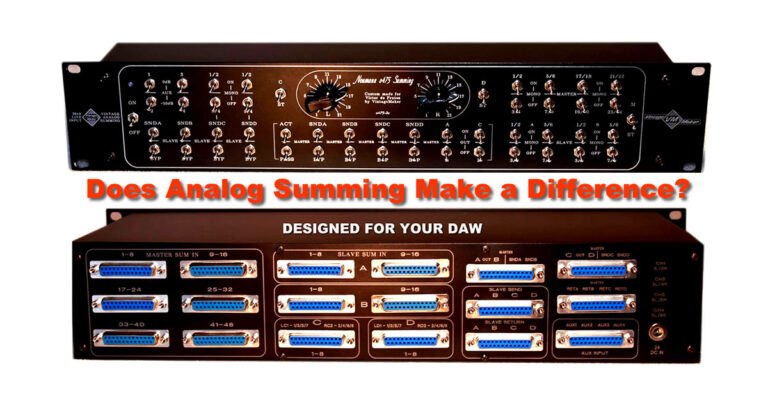
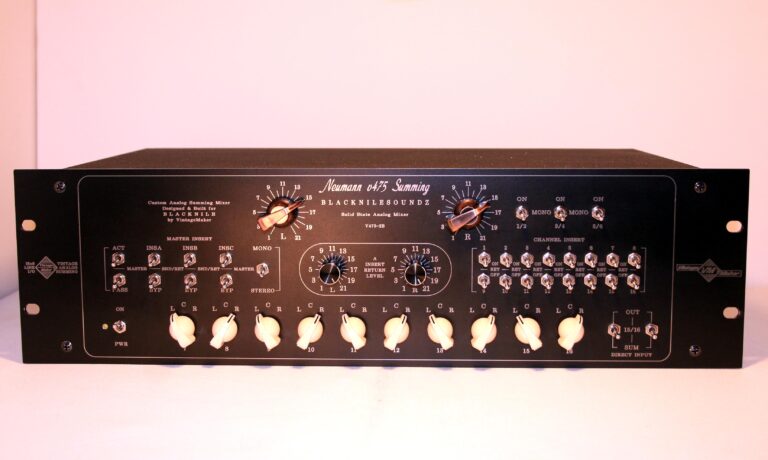
Analog summing is the process of combining multiple audio channels using analog circuitry rather than performing mathematical summation inside a digital audio workstation.
Instead of purely numerical addition, audio signals pass through physical components such as resistors, transformers, amplifiers, and summing networks. The electrical characteristics of these circuits can introduce subtle interactions that may influence phase behavior, dynamic response, and harmonic content.
Unlike digital summing, which performs signal addition in the digital domain, analog summing can contribute a different spatial and tonal character depending on the circuit design and operating level. This is often associated with perceptions of depth, width, and analog warmth.
Why Analog Summing Sounds more natural and Warmer Than Digital?
Digital summing is linear and transparent. Analog summing is nonlinear and dynamic.
This nonlinearity creates:
- gentle harmonic enhancement
- natural compression behavior
- improved stereo separation
- smoother transient handling
- perceived depth and dimension
These characteristics are not “effects” — they are physical behaviors of analog circuits responding to voltage, current, and impedance interactions.
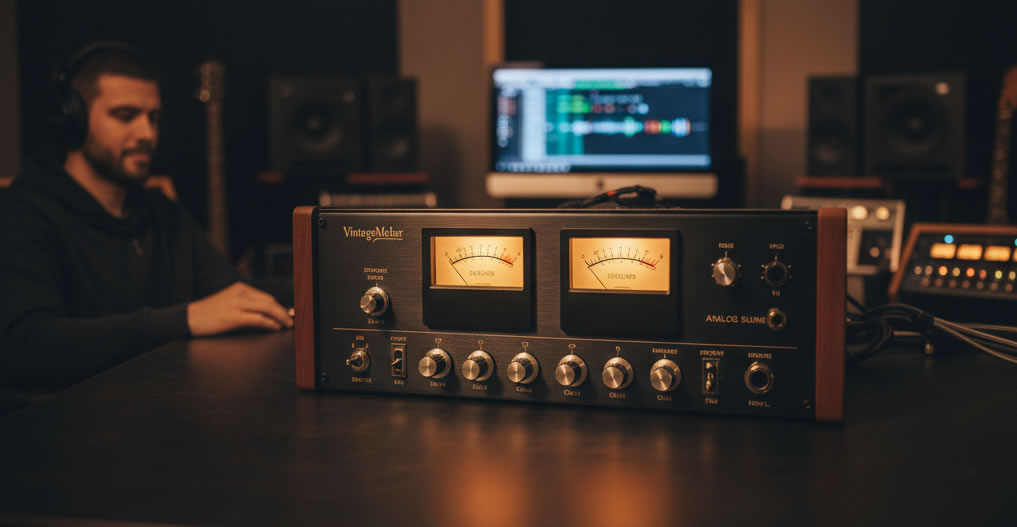
Harmonics Explained — A Technical Perspective
Harmonics are frequency components that occur at integer multiples of the fundamental frequency. In analog audio circuits, non-linear behavior in active and passive components (such as amplifiers, transformers, and headroom limits) can generate harmonic content as signal level increases.
- 2nd-order harmonics are octave-related to the source and are often perceived as increased density or fullness when present at low levels.
- 3rd-order harmonics, related by an octave plus a fifth, can enhance perceived definition and forwardness when carefully controlled.
- 4th-order harmonics (two octaves) add air and shimmer at very low levels.
- 5th-order harmonics contribute density and edge when driven harder.
Because these harmonics are harmonically correlated with the original signal and typically dominated by low-order components, they are often perceived as musically integrated rather than as overt distortion. Unlike hard digital clipping, which introduces abrupt waveform truncation and high-order spectral components, analog saturation typically exhibits a soft-knee transition, producing a gradual increase in harmonic content as the circuit approaches its operating limits
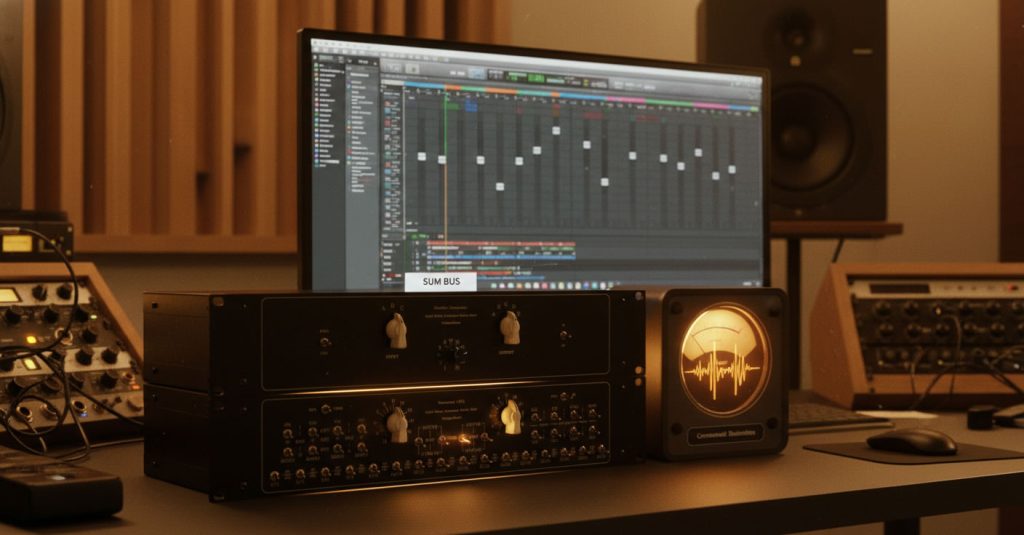
Transformer-Specific Harmonic Behavior
A common simplification is that transformers only generate odd harmonics while tubes favor even harmonics. In practice, most nonlinear analog stages produce a mixture of even and odd harmonic components, but the relative balance and spectral distribution depend on the circuit topology, core material, and drive level.
- Neumann-Haufe transformers (These transformers typically exhibit predominantly 2nd-order harmonic content at moderate signal levels, especially when driven asymmetrically. As the magnetic core approaches saturation, 3rd-order and higher-order components gradually increase, adding density and low-mid weight. Their perceived “warmth” is largely the result of core material, winding structure, and bandwidth shaping rather than harmonic distortion alone. This sonic signature is closely associated with classic Neumann microphones and Telefunken-era signal paths.
- Filtek transformers (Swiss-made, SSL-style character): While sharing certain European transformer design principles with the Neumann–Haufe lineage, Filtek transformers are generally perceived as tighter and more controlled. They tend to exhibit less low-mid bloom and a more restrained saturation profile. In SSL console architectures, the transformer contributes to a defined low end and forward transient response, though much of the “SSL sound” also derives from the surrounding active circuitry rather than the transformer alone.
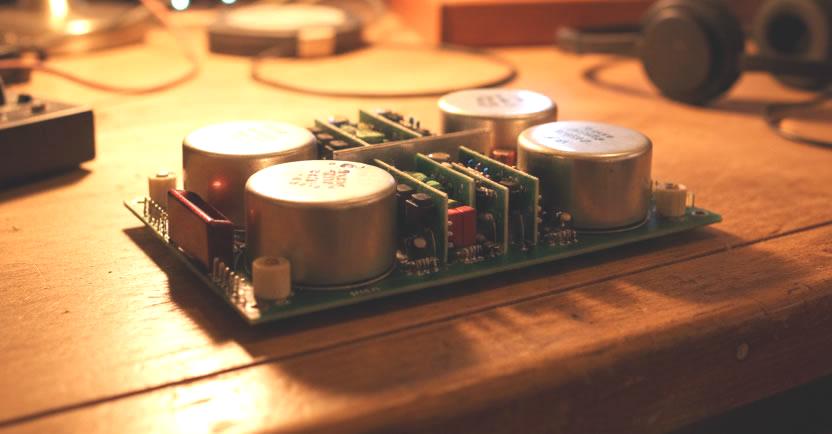
- VCA-based gain stage (between transformer stages): Placed between transformer stages in a summing mixer architecture, the VCA-OPA provides controlled makeup gain with high linearity and wide bandwidth. At nominal levels it introduces minimal harmonic distortion; its primary role is precision gain control and headroom management rather than coloration. Any nonlinear behavior under higher drive conditions is determined mainly by circuit symmetry, feedback structure, and voltage limits — distinct from the magnetic saturation characteristics of the surrounding transformers.
- Passive resistor summing networks: In properly designed passive summing systems operating at nominal levels, harmonic generation is essentially negligible. Any coloration is typically dominated by the makeup gain stage rather than the resistor network itself. When driven beyond optimal levels, distortion emerges gradually, usually beginning with low-order harmonics depending on the following amplification stage. As a result, passive summing is best described as spectrally transparent, with tonal character primarily defined by the gain recovery circuitry.

The Role of Headroom in Analog Summing
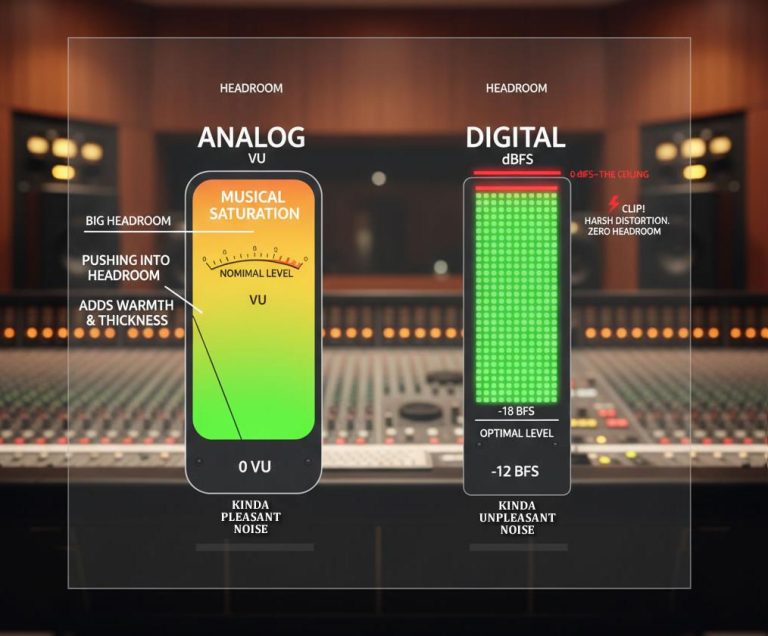
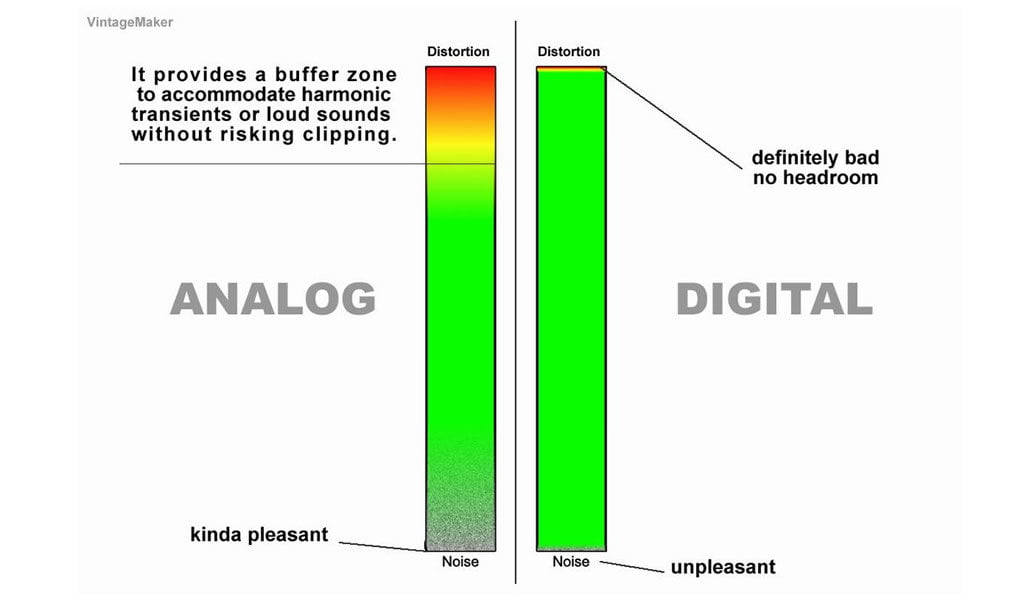
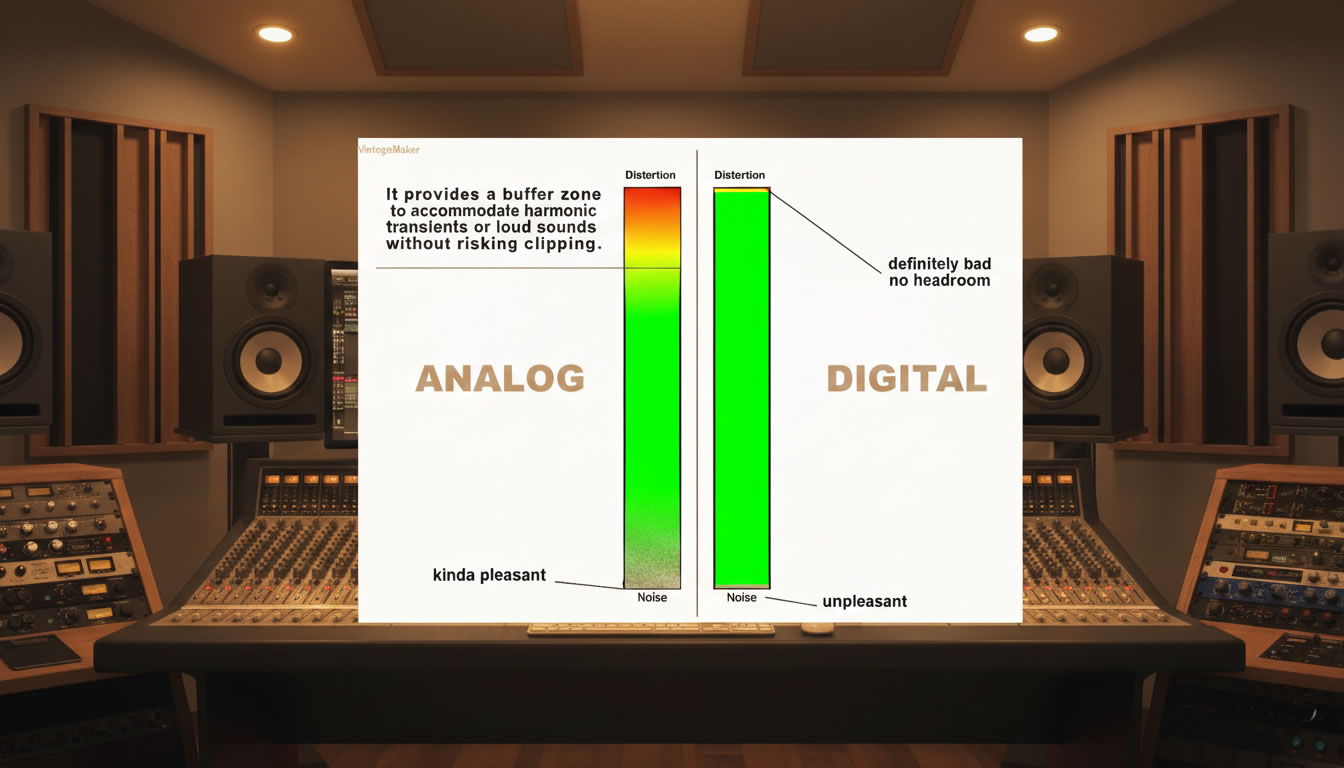
Headroom is the safety margin of an audio system — the dynamic range between the nominal operating level and the onset of audible distortion. Professional analog equipment typically operates at a +4 dBu nominal level, while being capable of delivering peak output levels up to +24 dBu or higher, providing approximately 20 dB of usable analog headroom.
This headroom allows transients to remain clean and uncompressed, harmonic content to develop gradually and musically, wide and stable stereo imaging, consistent instrument separation, and a greater sense of dynamic depth.
For the complete technical explanation of how analog headroom works — including the dBFS vs. dBu distinction and how to use it as a creative tool — see: Analog Headroom Explained →
The Two Key Principles of Analog Summing
1. Input Signal Level Matters
Input signal level plays a critical role in how an analog summing system behaves. As signal level increases within the summing path, the circuit gradually approaches its non-linear operating region, where low-order harmonic content can begin to emerge.
As more channels are combined and overall bus level rises, the summing amplifier may reach a point where subtle saturation occurs. When properly managed, this transition can introduce gentle harmonic enhancement that adds perceived density, depth, and musical cohesion to a mix.
With correct gain staging and panning, analog summing can deliver clear instrument separation and a stable, wide stereo image. Unlike digital summing, which operates within fixed numerical precision and clips abruptly at defined limits, analog summing is primarily limited by the headroom and design of the summing circuitry, allowing complex mixes to remain open and dynamic.
The key is not excessive level, but controlled level — driving the summing circuit close to, but not beyond, its optimal operating range. This is where musically integrated harmonic content can appear without compromising clarity or transient integrity.
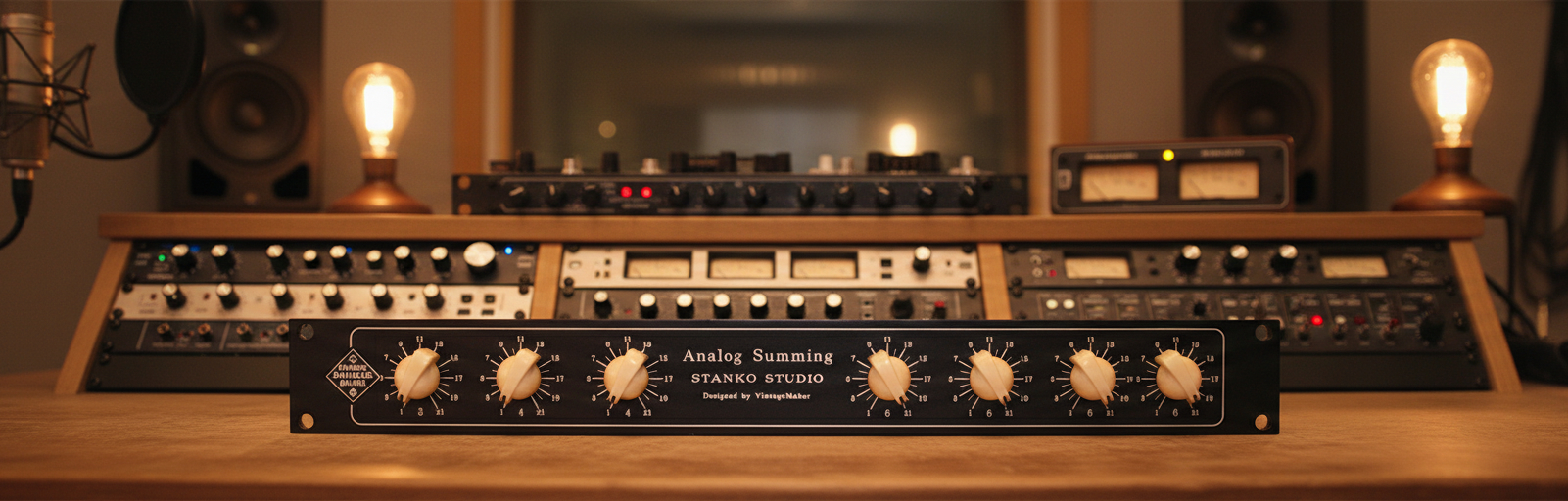
2. Shaping Harmonics with External or Internal Amplification Stages
Introducing additional analog amplification stages — such as DAW outputs feeding external preamps, or classic transformer-based units like Neumann or Filtek transformers – can further shape the harmonic structure of the mix bus.
These circuits are known for producing predominantly 2nd- and 3rd-order harmonics, reinforcing the fundamental while adding depth, dimension, and a sense of spatial complexity when used with restraint.
How the SUM BUS Creates Headroom and Harmonic Structure
Gain Staging – How to Reach the Analog Sweet Spot
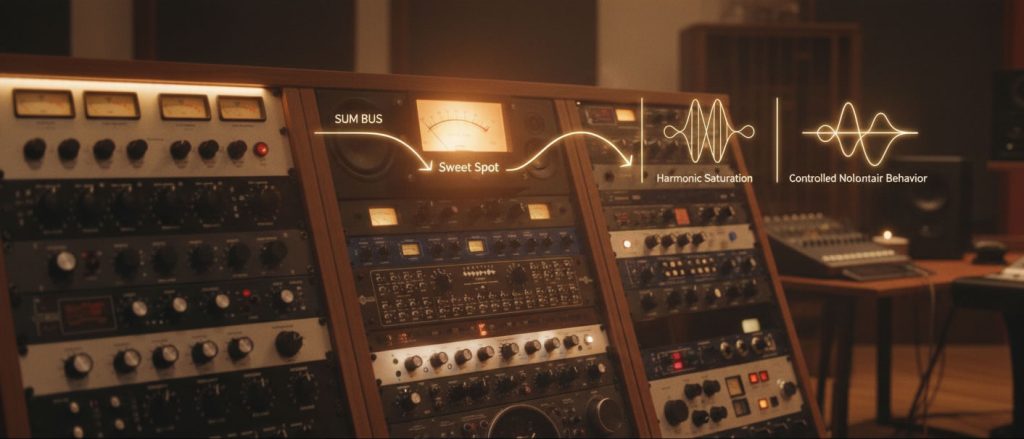
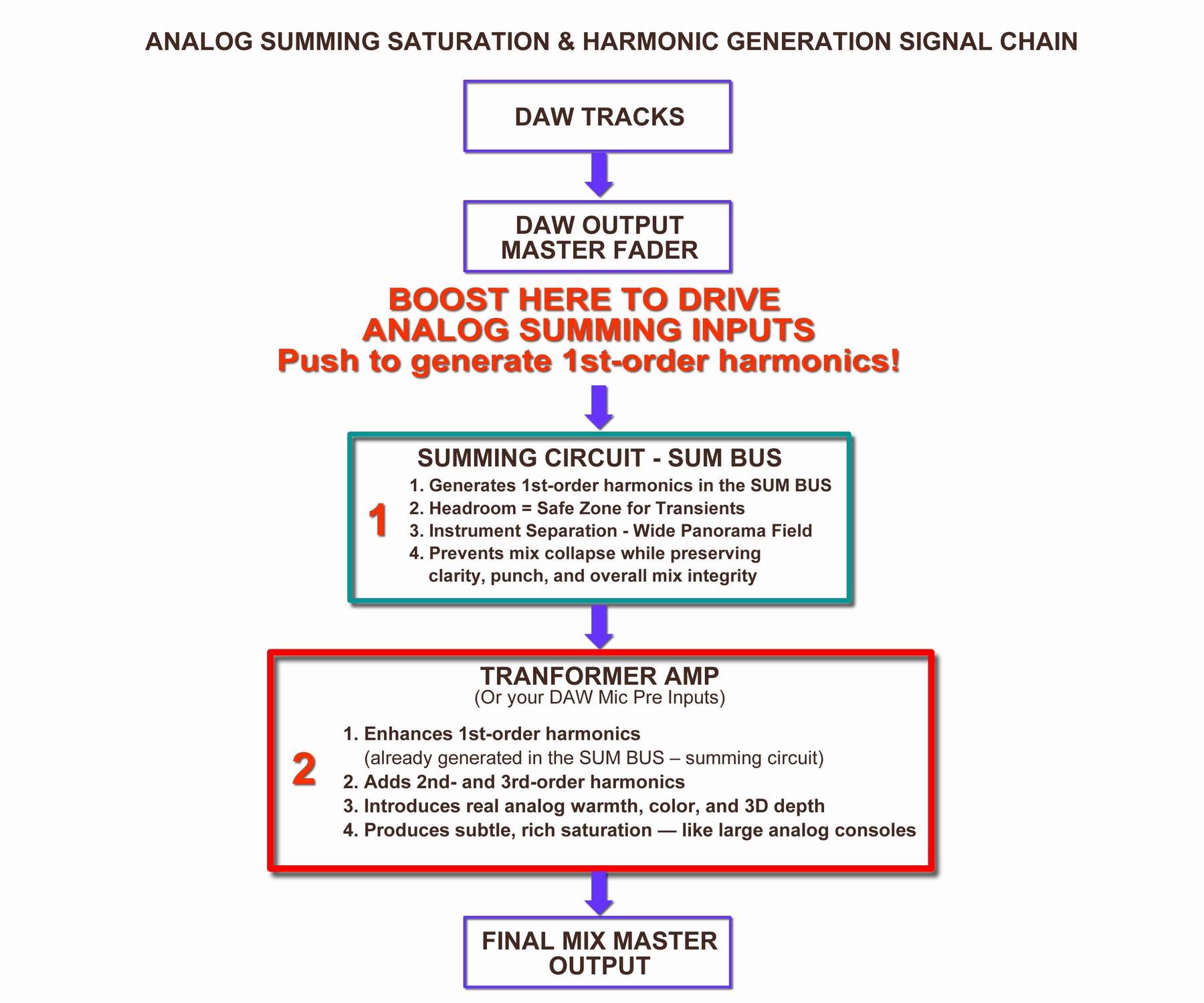
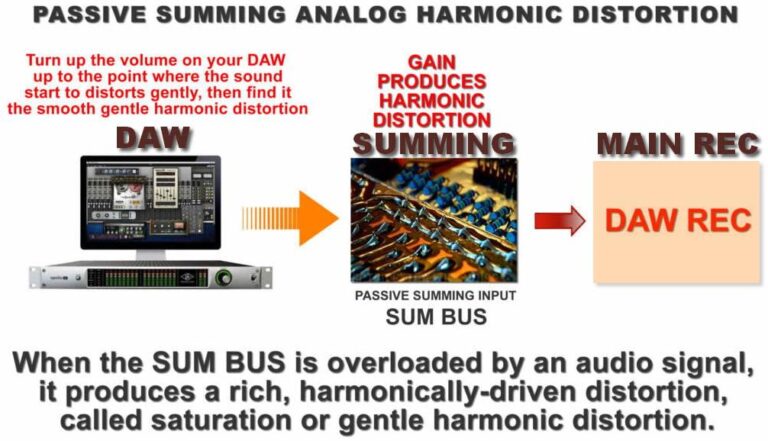
The SUM BUS (summing circuit) built around a summing mixer’s input resistor network, establishes a protected headroom zone inside the analog domain. This headroom acts as a secure space for audio signals, preserving individual instrument focus and their precise placement within the stereo field, resulting in a wide, deep, three-dimensional sound.
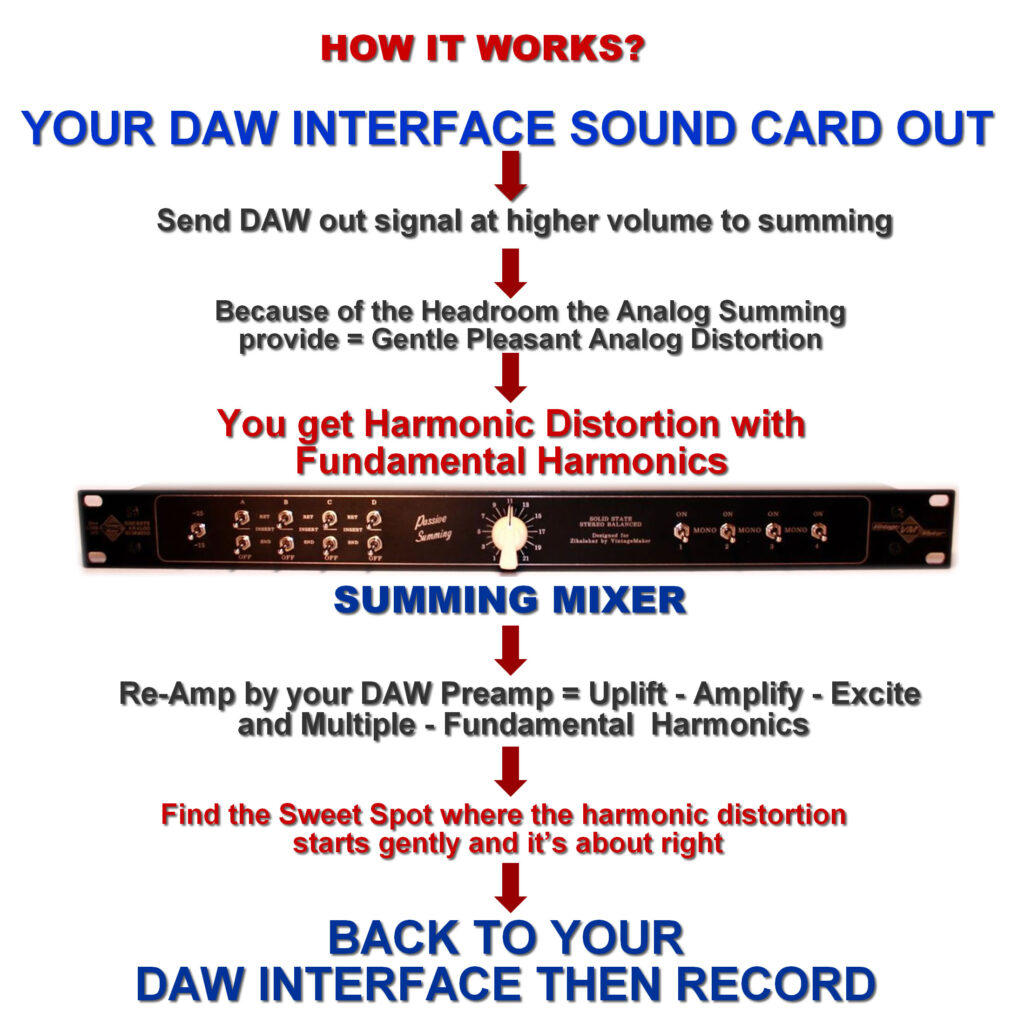
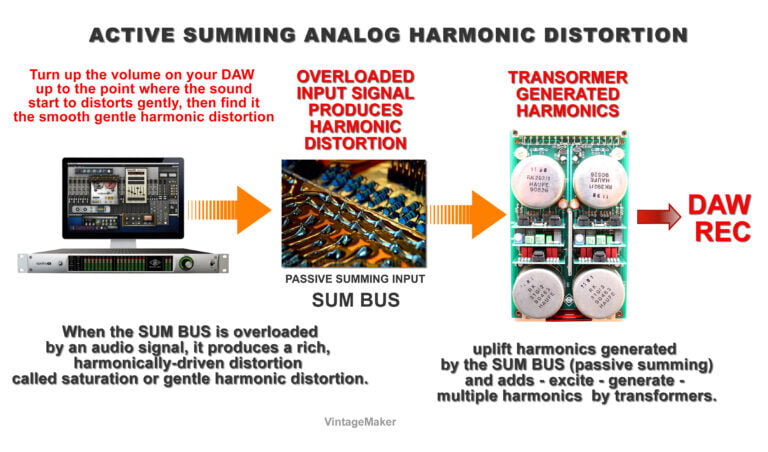
By applying proper gain staging — sending higher-level signals from the DAW interface outputs into the summing inputs — the downstream amplification stage begins to operate in its optimal nonlinear range. At this point, gentle analog harmonic distortion is introduced and captured directly within the summing network.
These harmonics are then combined into a master stereo signal, which can be further shaped by passing the summed output through a DAW interface preamp, an internal amplifier, or an external transformer-based amplifier. At this stage, the amplification circuit reinforces the fundamental harmonics created in the SUM BUS and adds additional saturation and energy, enhancing harmonic complexity and producing the characteristic warm analog color.
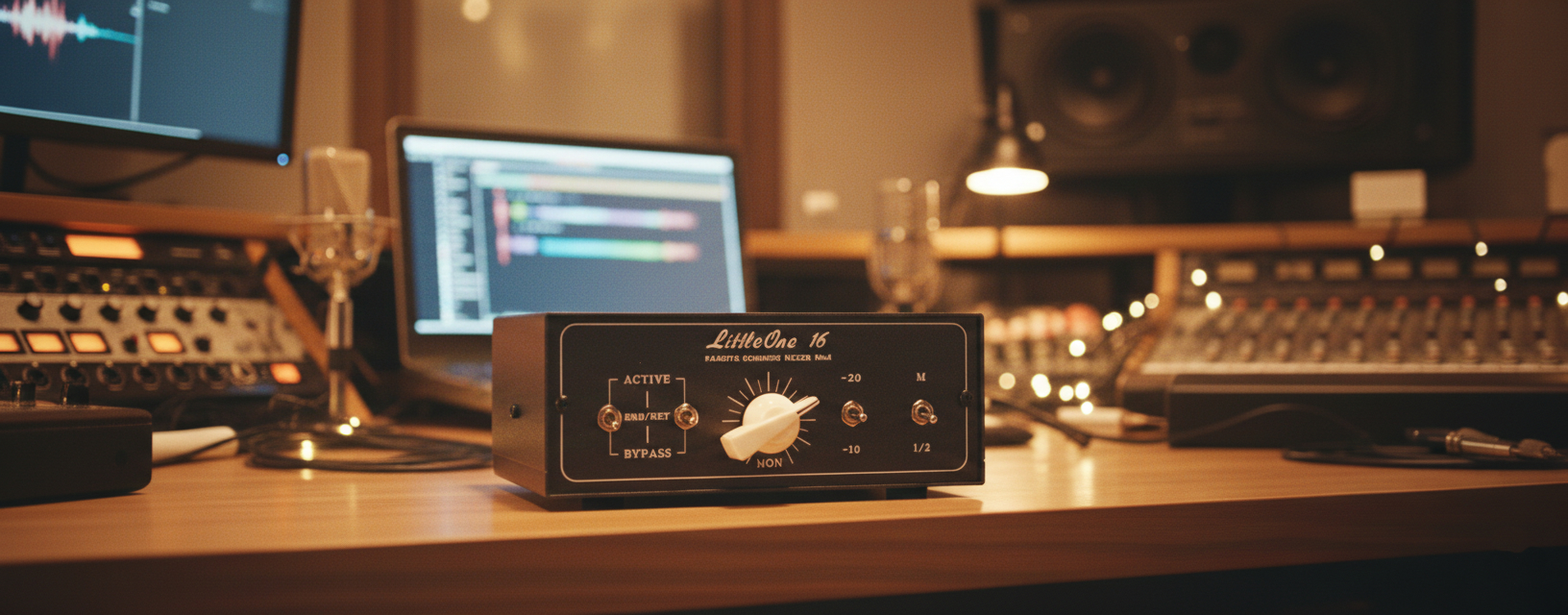
Where Harmonics Appear: Two Stages
Stage 1 — Inside the SUM BUS: The resistor network itself creates the first layer of harmonics as it approaches saturation. Predominantly 2nd-order content at moderate levels.
Stage 2 — In the Amplification Stage: Your DAW mic preamp, internal amp, or external transformer-based amplifier adds a second harmonic layer with its own tonal character. Together, these layers create complex, musical saturation rather than simple distortion.
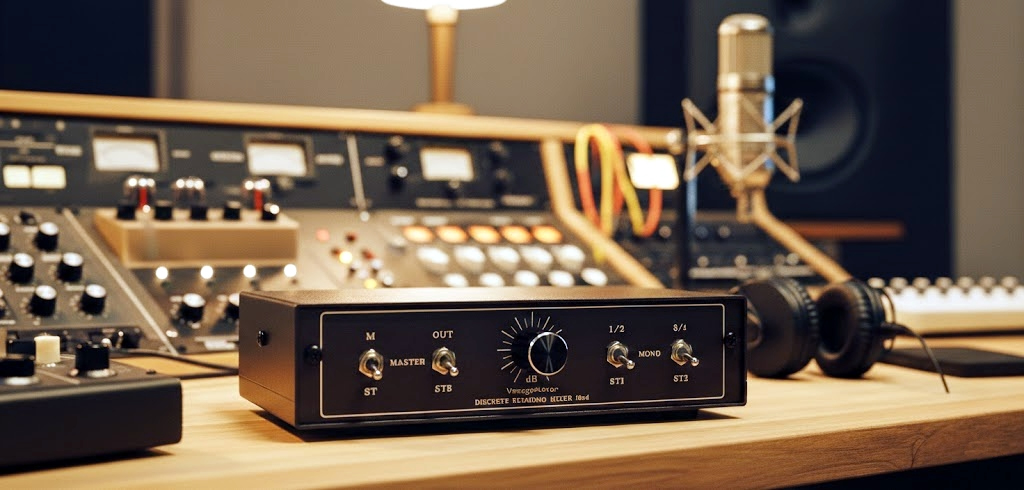
Gain Staging for the Analog Sweet Spot – Key Principles
Proper gain staging is the practical key to unlocking harmonic behavior in an analog summing setup. The goal is to find the point where the SUM BUS begins to produce gentle saturation — without overdriving it into audible distortion.
The golden rule: aim for DAW output peaks around -18 dBFS to -12 dBFS. This typically corresponds to 0 VU / +4 dBu in the analog domain — the optimal input level for most analog summing circuits.
⦁ Push slightly above nominal to activate the harmonic sweet spot
⦁ Listen for the point where the mix feels more cohesive and open — not distorted
⦁ The stereo image should widen, and instrument separation should improve
⦁ If clarity suffers, you’ve gone too far — pull back slightly
For a complete step-by-step gain staging guide covering stem preparation, level setting, and sweet spot identification, see: The Human Factor in Analog Summing → and the gain staging section in our main guide: How Analog Summing Creates Depth, Warmth & Headroom →.
How does analog summing preserve instrument clarity?
Analog summing ensures each channel maintains definition even in complex sessions, preventing mix collapse and keeping instruments distinct. The passive resistor summing network distributes signal energy across a physical domain, allowing each instrument to occupy its own acoustic space without competing for digital headroom.
How Does Analog Summing Improve Depth and Stereo Imaging?
By naturally spreading frequencies and leveraging nonlinear interactions, analog summing creates a wider, more open stereo image and immersive soundstage. Physical component interactions across channels introduce subtle, correlated differences between the left and right signal paths that enhance spatial perception.
How does analog summing add warmth?
Analog circuits by their nature introduce subtle 2nd- and 3rd-order harmonics that enrich the tone, making the mix sound fuller and more musical compared to digital summing. These harmonics are correlated with the source material — they add density without introducing dissonant or unwanted frequency content.