The Hidden Truth of ITB vs. OTB: Why Analog Summing Feels Wider & Warmer
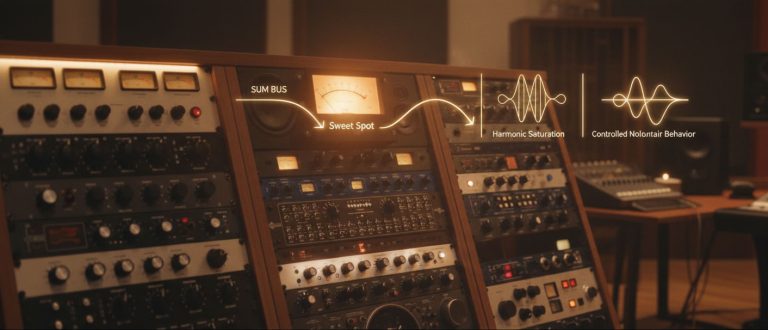
Many people ask: “If I can do everything inside my computer, why should I send my audio to an external summing box?” The answer is that analog summing doesn’t just add signals — it reacts to them. A DAW sums tracks with perfect linearity, while an analog summing mixer uses real circuitry that responds to level and density. When driven, it produces soft saturation, low-order harmonics, and gentle peak control — giving your mix more cohesion, depth, and warmth.
For a full technical comparison of digital vs. analog signal behavior, including a feature comparison table and hybrid workflow guide, see our complete guide: How Analog Summing Creates Depth, Warmth & Headroom →

The Beginner’s Truth: Why “In-the-Box” Feels Crowded
When you mix entirely inside a computer, you’re asking the DAW to sum hundreds or thousands of signals with perfect mathematical precision. The result is technically correct, but it can sometimes feel muddy, tight, narrow, or harsh, especially as the arrangement gets dense. This isn’t because digital is bad — it’s because the linear digital summing doesn’t add any natural interaction between tracks.
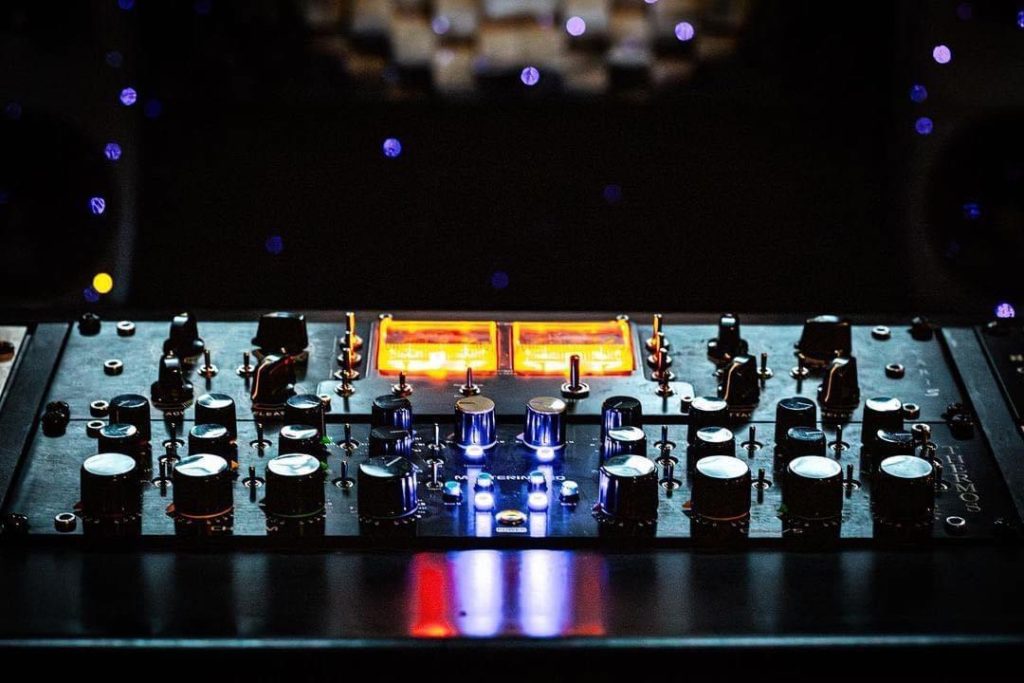
The Secret: Why Analog Summing almost Never Runs Out of Space
One of the biggest advantages of an analog summing system is that it is not limited by a digital ceiling. In a DAW, you ultimately hit a fixed numerical ceiling (0 dBFS), and everything beyond that clips. In the analog domain, you’re working with voltage and current limits, not an absolute “wall.”
When you push the summing bus, the circuitry enters gradual saturation instead of hard clipping — and that behavior is musically useful.
Want the full technical explanation of how analog headroom works and why it sounds musical? See: Analog Headroom Explained →
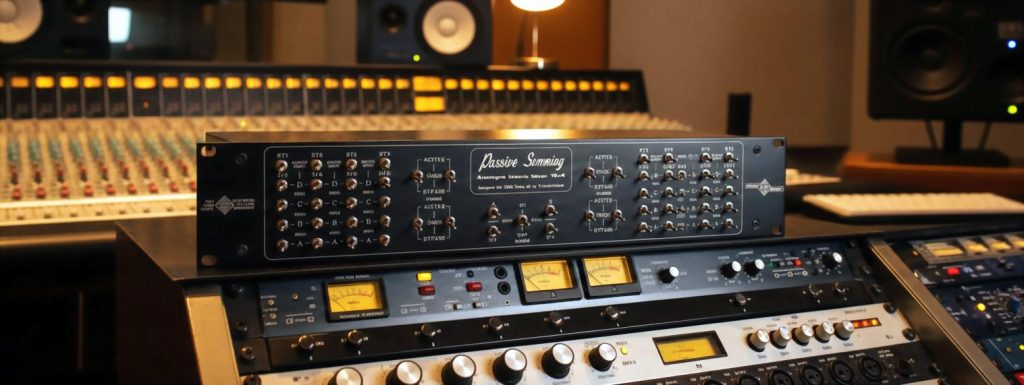
How Analog Summing Adds Character
Analog summing doesn’t create “infinite headroom,” but it does react differently to level. High-quality summing circuits (and transformers in some systems) introduce low-order harmonics and gentle peak control, which can make the mix feel more cohesive and smooth.
When many channels drive the bus at once, the small nonlinearities average rather than stack destructively, so the mix doesn’t feel congested — it often feels wider, deeper, and more open. You can send 4, 16, or even 96 channels into the summing bus without the sound becoming congested. Instead of the mix “collapsing” under the weight of many tracks, the analog circuitry provides a massive headroom buffer. Your music stays wide, open, and effortless, no matter how complex the production.
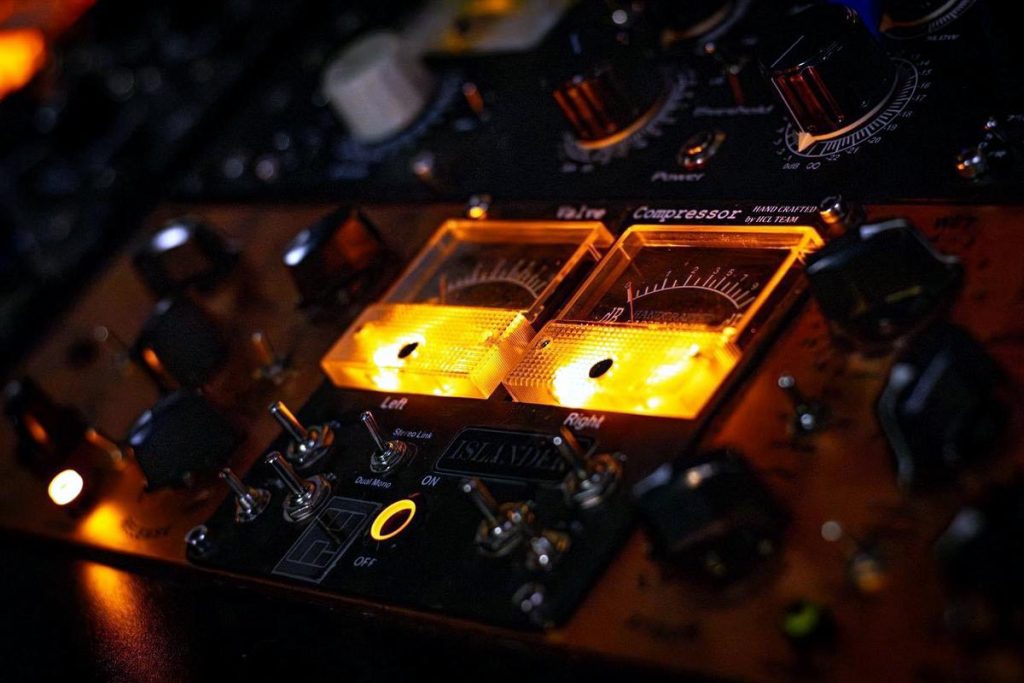
The Human Factor: Why Our Ears Prefer Voltage
Digital summing is mathematically perfect, but the human ear evolved to interpret physical sound waves, not just numbers. Analog summing reintroduces subtle imperfections and harmonic richness that our brains interpret as warmth, depth, and emotion.
It’s not magic — it’s physics reacting in a way that our ears naturally prefer.
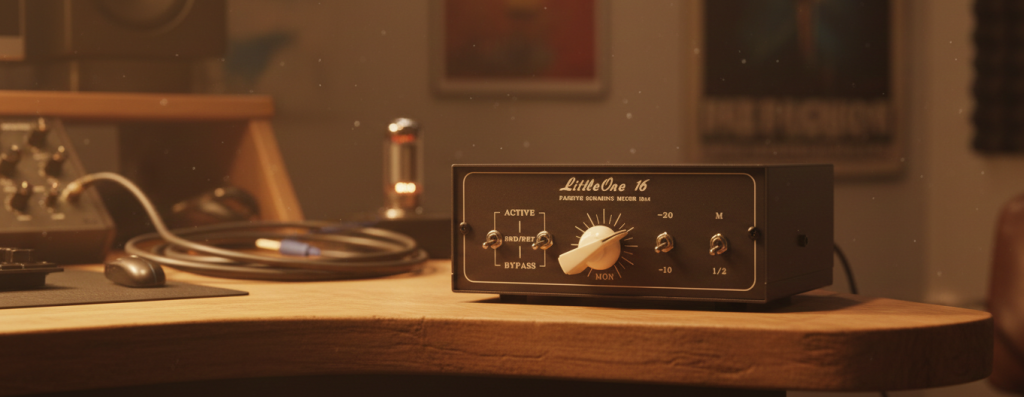
Why Our Ears Enjoy Analog
Our ears are accustomed to listening to physical sound waves, not just digital samples. Analog summing adds small, continuous variations and harmonic enrichment that create a more engaging listening experience. It transforms a technically perfect digital mix into something that feels alive and musical.
The psychoacoustic preference for low-order harmonic content is well-documented. 2nd-order harmonics (the octave) are inherently consonant with the fundamental — our auditory system interprets them as “more of the same,” adding richness without dissonance. This is why a well-driven analog bus feels like a natural improvement rather than an added effect.
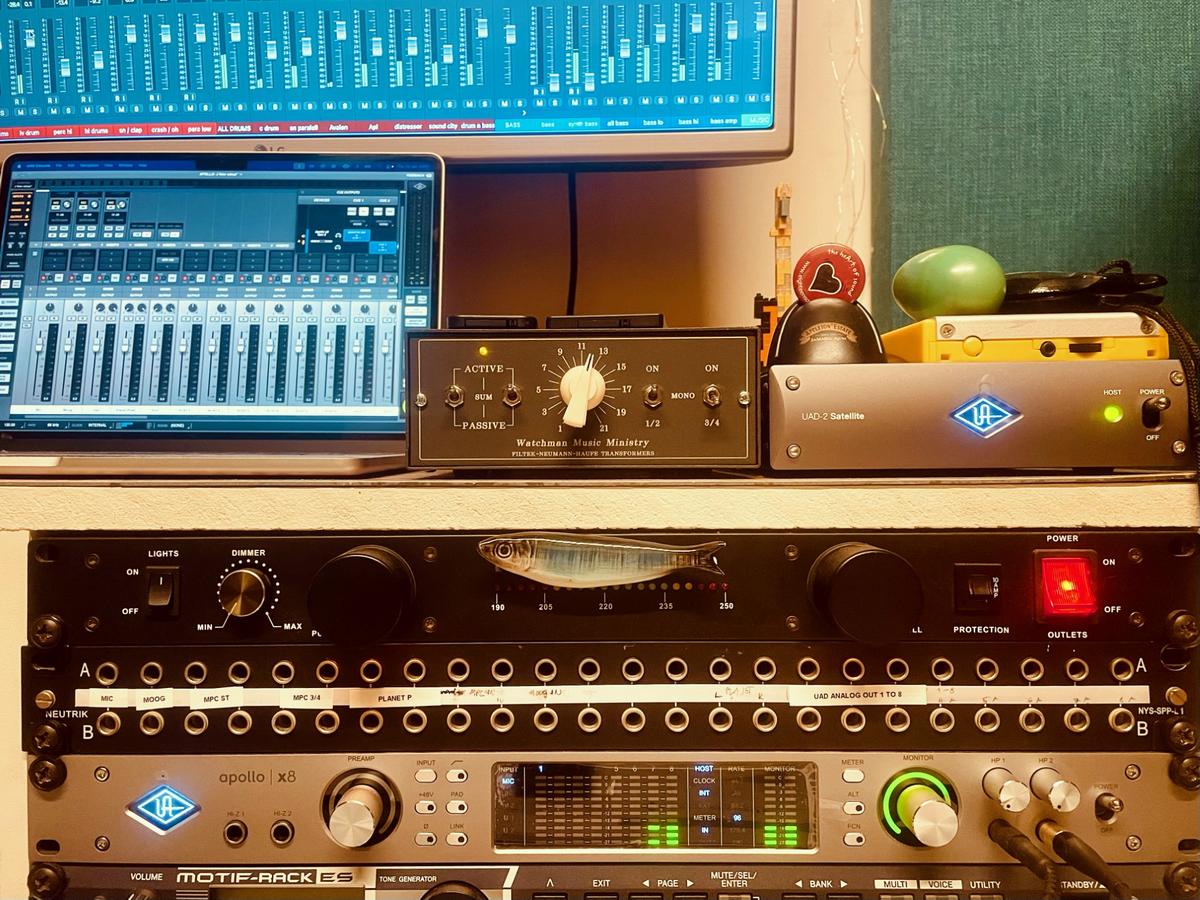
What Changes in Your Workflow When You Go OTB
Moving from an ITB-only workflow to an OTB or hybrid setup involves a shift in how you think about mixing:
⦁ You commit to gain staging before printing: because the analog bus responds to level, you can’t just “fix it in the box” after the fact. This forces more intentional mixing decisions early.
⦁ You listen more, watch meters less: the analog domain rewards ear-based decisions. The sweet spot is something you hear, not something you see on a digital readout.
⦁ You embrace the physicality of sound: working with real voltages, cables, and hardware creates a different relationship with the mixing process — many engineers describe it as more musical and less technical.
⦁ Recall is different: OTB mixing doesn’t have instant DAW recall. Many engineers handle this by printing stems and keeping the summing setup simple and repeatable.
⦁ The learning curve is real but short: most engineers report that after 2–3 sessions with an analog summing box, the workflow becomes intuitive.
Ready to learn the techniques that get the most from your OTB workflow? See: The Human Factor in Analog Summing →

Technical Highlights of Analog Summing
⦁ Continuous Signal: Analog voltage flows continuously, preserving natural micro-details.
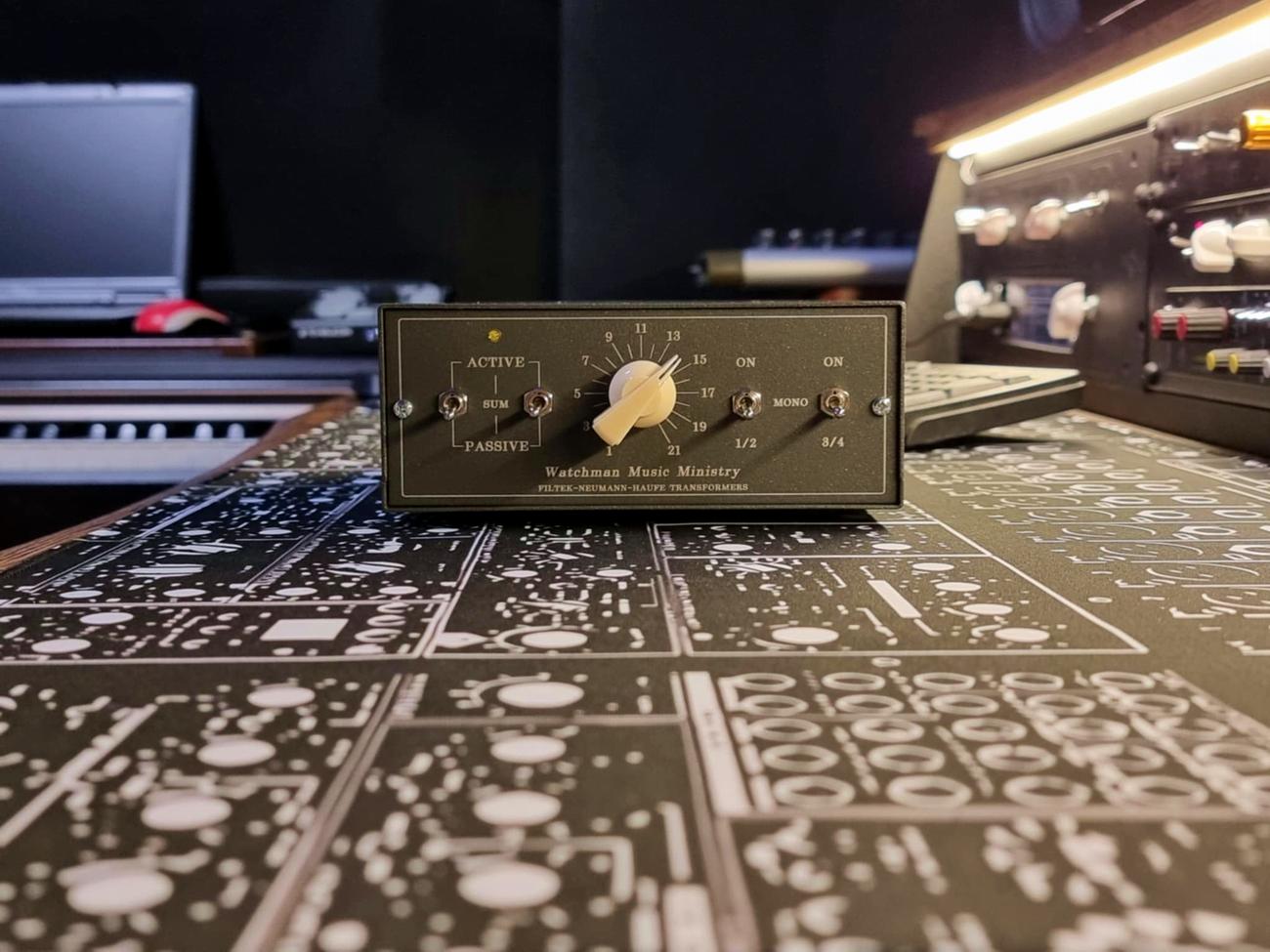
⦁ Harmonic Glue: Quality transformers (Neumann, Filtek) generate 2nd and 3rd-order harmonics that bind tracks together musically.
⦁ Stereo Imaging: Component interactions can enhance perceived depth and width naturally.
- The Golden Rule: Aim for your DAW tracks to peak around -18 dBFS to -12 dBFS.
- Why? In the analog world, this usually corresponds to $0$ VU, which is where the circuitry operates with the most linear clarity and best signal-to-noise ratio.
- Pushing for Mojo: If you want more “warmth,” push your DAW outputs slightly hotter. This forces the summing resistors and transformers to work harder, generating those pleasing 2nd and 3rd-order harmonics.
Summary
Analog summing doesn’t replace the precision of a DAW — it complements it by adding musical character, subtle harmonics, and a sense of depth. Engineers who experience analog summing often find that it gives their mixes a more engaging, “alive” quality. The difference is rooted in physics: real signals interact as sinusoidal voltages through physical components, introducing subtle harmonics and non-linear behavior that digital summing alone cannot replicate.
For a technical comparison of analog summing vs. software plugin emulations (Waves NLS, UAD LUNA), and for the passive vs. active hardware comparison, see: Analog Summing vs. Summing Plugin →
FAQ
What’s the fundamental difference between mixing ITB and OTB?
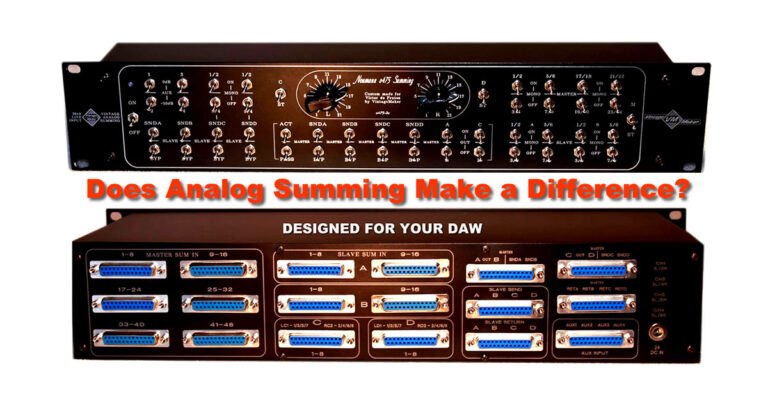
In-the-box (ITB) mixing sums audio tracks digitally inside your DAW using perfect mathematical algorithms — transparent and precise but operating within a fixed digital ceiling. Out-of-the-box (OTB) analog summing physically combines signals as voltages through real circuitry, which responds differently to level and signal density, producing soft saturation, low-order harmonics, and a sense of depth that software alone can’t fully replicate.
Why does analog summing often feel wider and warmer than digital summing?
Analog summing circuitry doesn’t just add samples numerically — it reacts to the energy and voltage of the signals. When driven, the hardware moves into soft saturation instead of hard digital clipping, introducing low-order harmonics and micro-nonlinearities that listeners perceive as wider stereo imaging, greater cohesion, and warmth.
Can analog summing prevent the “crowded” or “muddy” feel in dense digital mixes?
Many engineers believe so. Because analog summing doesn’t hit a hard digital ceiling, it provides a massive headroom buffer where multiple channels can be summed without sounding congested. This often results in a mix that feels more spacious and breathable compared to a high-track-count ITB sum.
Does analog summing fix all mix problems?
No — it doesn’t automatically solve mix issues or fix a poorly arranged project. The analog summing domain reacts to the mix the same way good monitors and room acoustics reveal problems: it reveals and enhances what’s already there. Good gain staging, arrangement, and tracking quality still matter first.