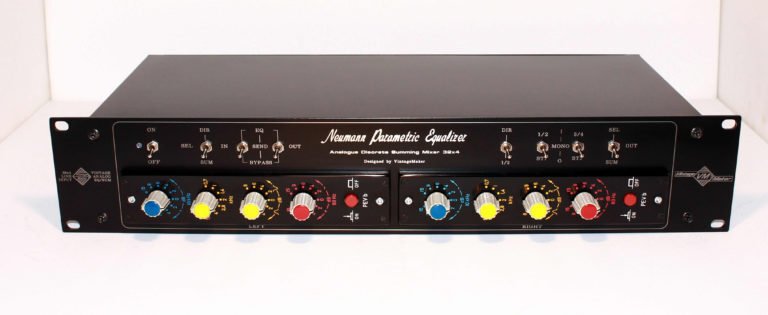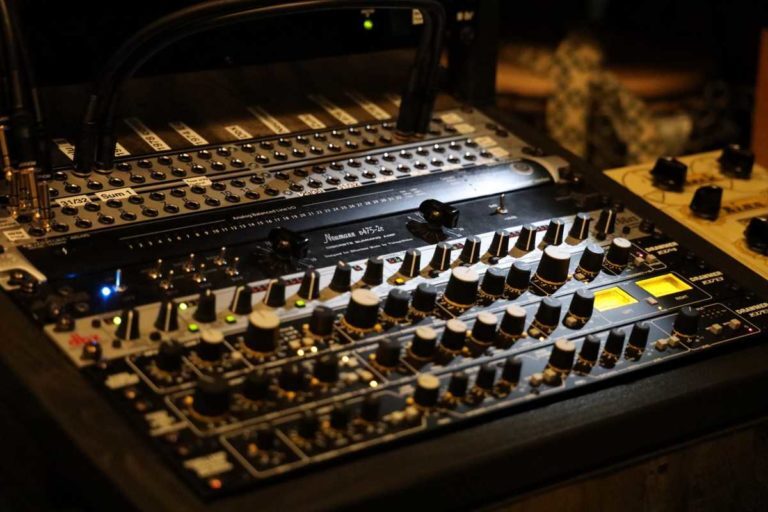
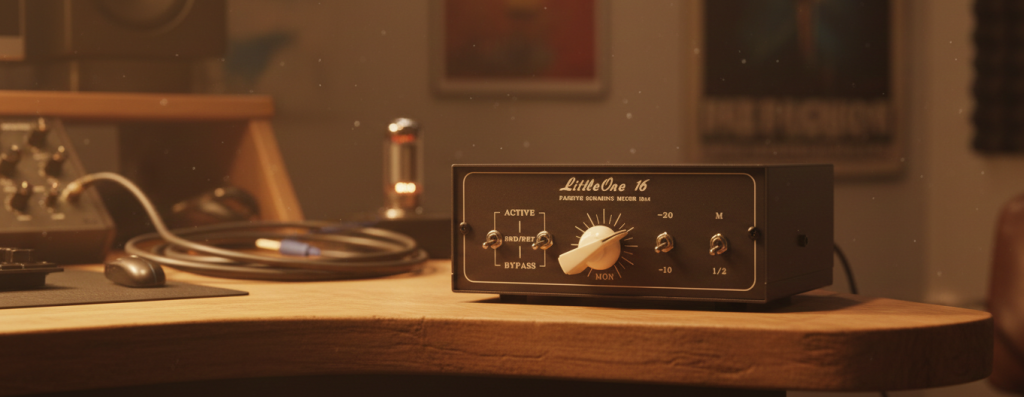
Best custom made mini passive summing mixers for home and pro studio producers
Not all passive summing mixers suit every studio. The right configuration depends on your interface, your track count, your workflow, and what you’re actually trying to achieve sonically. This guide breaks down the real differences between use cases — so you choose the right unit the first time.
Ready to find your configuration?

Who Needs a Mini Passive Summing Box?
A mini passive summing box is the right tool when you want to move audio out of the computer for the final mix stage — without the footprint, cost, or complexity of a full console or rack system. It’s compact, requires no power supply, and connects directly to your existing interface outputs and mic preamps.
Whether you call it a summing box or a summing mixer, the function is the same: multiple DAW outputs are combined as real electrical voltages through a precision resistor network, producing the harmonic interaction, headroom behavior, and stereo depth that digital summing alone cannot replicate.
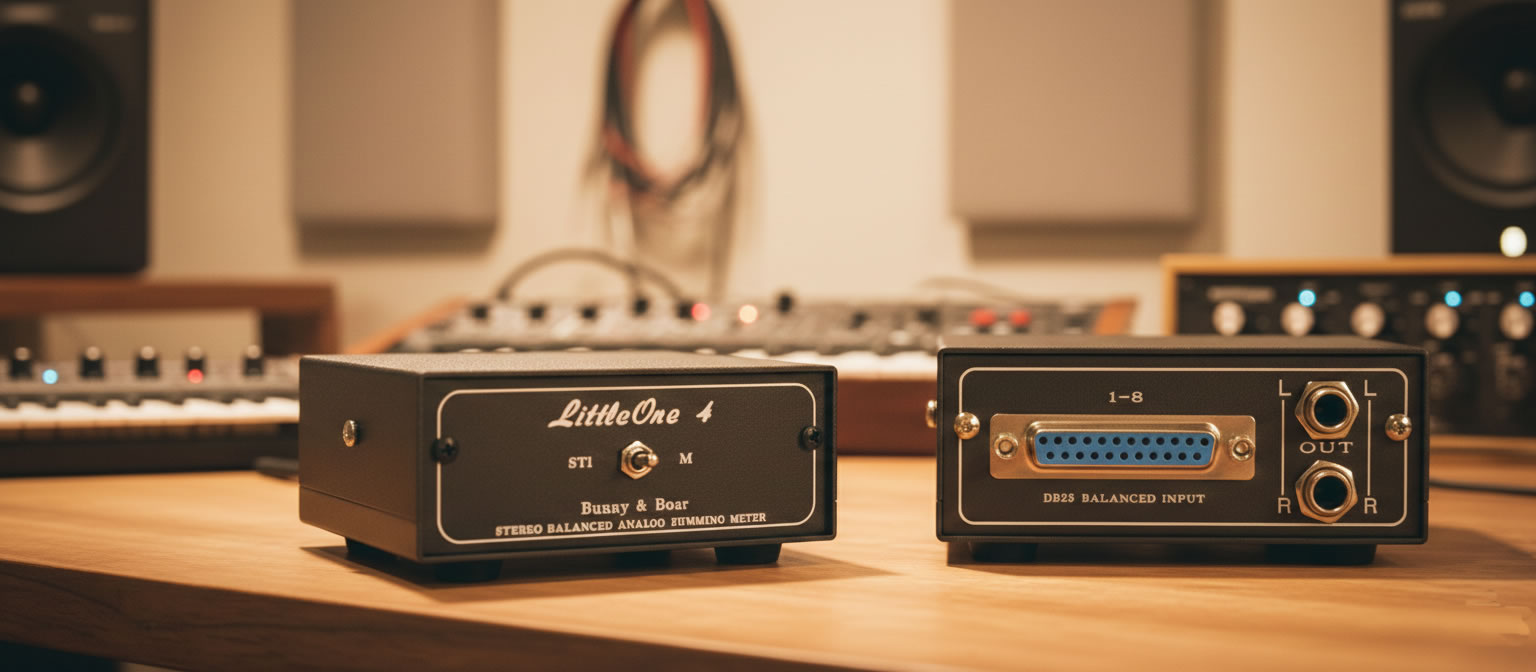
The Best Passive Summing Mixer by Use Case
Home Studio Producer — 4 to 8 Channels
You’re mixing in the box and things sound good — but something is missing. The mix feels slightly flat, narrow, or two-dimensional compared to what you hear on commercial releases.
If your interface has at least 4–8 line outputs, you’re already set up for analog summing. Route your main stems — drums, bass, music, vocals — out of the DAW and into the summing mixer. That’s it. What most producers notice first: the stereo image gets wider, instruments stop fighting for space, and the mix feels more like a finished record — without adding more plugins.
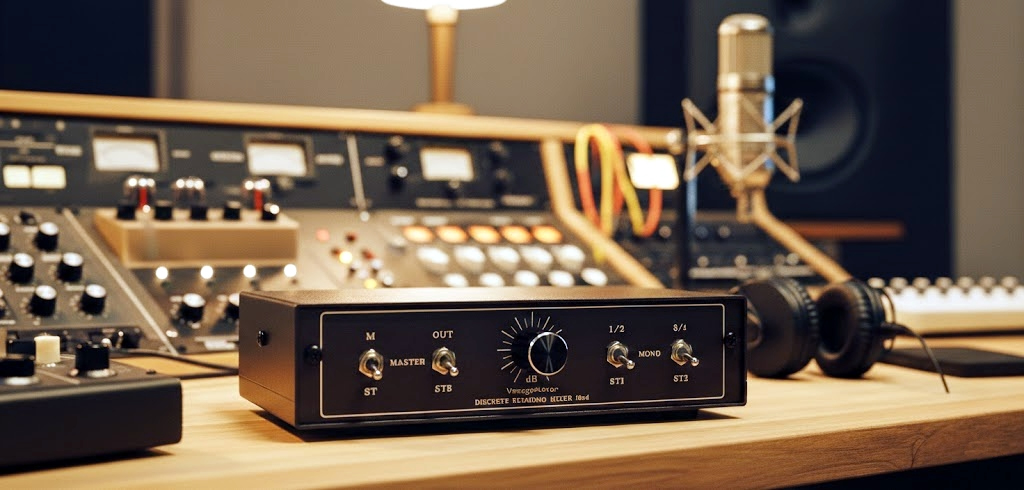
Project Studio Producer — 8 to 24 Channels
You’re regularly working with 20–40 tracks, grouping them into 8–24 subgroups or individual main channels, and want more detailed stem control in the analog domain.
An 8–24 channel configuration separates drums, bass, guitars, keys, synths, vocals, and effects into dedicated analog paths — increasing inter-stem interaction at the summing stage while preserving full DAW precision and recall. The most popular hybrid configuration: analog console-style summing without the size, cost, or maintenance of a large-format desk.
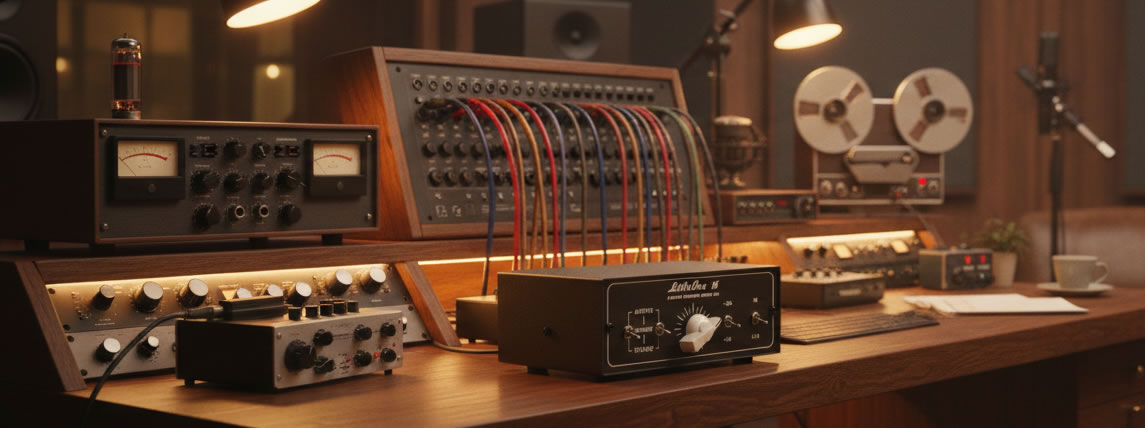
Synth & Hardware Producer — Mono and Stereo Sources
You’re running multiple hardware synths, drum machines, or modular systems simultaneously and need clean summing of both mono and stereo sources with accurate center imaging and predictable gain structure. A passive summing mixer with stereo-to-mono switching provides proper mono placement, transparent stereo integration, and a cohesive final mixdown – replacing a traditional mixer in streamlined hardware setups without active circuitry, using your existing DAW preamps for makeup gain.

Mini Desktop Configurations: 4–24 Channels
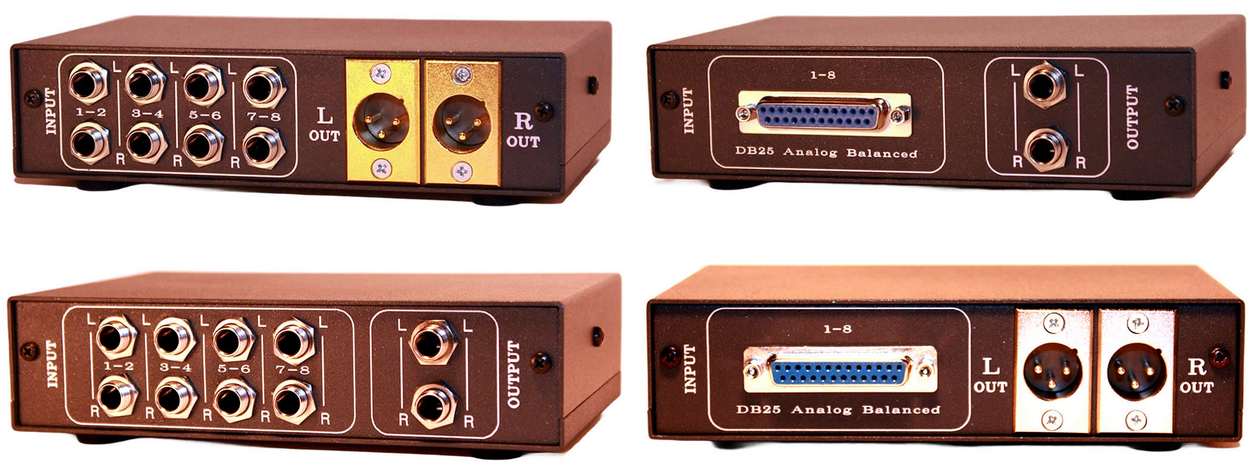
▸ Tailored to Your Setup Custom-built to match your audio interface, output level, and workflow. Available from 4 up to 24 channels with options including stereo-to-mono summing, headroom optimization, and XLR, TRS, or DB-25 connectivity.
▸ True Analog Summing Architecture Fully passive summing networks allow natural signal interaction across channels. The result is enhanced depth, dimensionality, and subtle harmonic cohesion that only physical circuitry can provide.
▸ High Headroom & Separation Designed for modern converter levels, with optional gain optimization to ensure proper gain staging and wide stereo integrity — even in dense sessions.
▸ Compact Format, Professional Capability Mini desktop footprint with serious studio performance. Available in 4, 8, 16, or 24-channel configurations — ideal for hybrid mixing environments.
▸ Designed For Home producers entering the analog domain · Project and professional studios integrating hybrid workflows · Hardware and DAW users seeking dedicated analog summing without the size of a full console · Synth, drum machine, and modular users needing clean mono/stereo summing
| Channels | Best For | Key Benefit |
|---|---|---|
| 4–8 | Home studio, first hybrid setup | Dedicated analog summing stage with minimal footprint and straightforward stem integration |
| 8–16 | Project studio, hybrid workflow | Flexible stem routing with increased analog bus interaction across core mix elements |
| 16–24 | Professional studio, large sessions | High channel capacity in a compact desktop format, aligned with multi-output converters |
| Synth / Mono Focus | Hardware synths, drum machines, modular systems | Accurate mono center integration and controlled stereo summing for mixed source types |

Customer Feedback and Reviews
“I had no idea what I was doing at first. I just plugged it in, routed my stems, and hit play. The difference was immediate and everything just sat better. I didn’t change a single plugin or EQ setting. I printed 6 stereo stems and two monos through it just to see. First thing I noticed was that I didn’t feel the need to EQ the top end as much afterward. The stereo image felt more stable, especially the overheads. It’s subtle, and record ready — no hassle. So happy with it.” — Jake M., home studio producer
“I’ve been mixing fully in-the-box for years, so I’m skeptical of anything that promises “depth,” especially from a passive box. In my first session, I ran stems through it and level-matched carefully. By the third mix, I noticed I wasn’t reaching for dynamic control as much, especially in the upper mids. Transients felt a bit rounder without losing attack, and the low end just seemed to lock in on its own.” — Chris Vargas, freelance mix engineer
“I track a lot of guitars and synth layers, and midrange buildup is usually where I spend most of my time. Running grouped stems through this, the center felt less congested. I still EQ like normal, but I’m not fighting phase weirdness as much when stacking parts. I’m not saying it mixes for you – but it removes a layer of resistance that I didn’t realize was there. Balances come together faster.” — Felix Hartmann, project studio producer
“I’ve worked on large-format consoles and various summing setups over the years. What surprised me here is how consistent the stereo field stays when you start leaning into it. Noise floor is low in real sessions, and the harmonic behavior feels progressive rather than spiky. It glues eight stereos – 16 channels before hitting my SSL BiG SiX – without taking up precious channels on it. That alone makes it worth having in the chain.” — Ron Pieter, recording & mix engineer
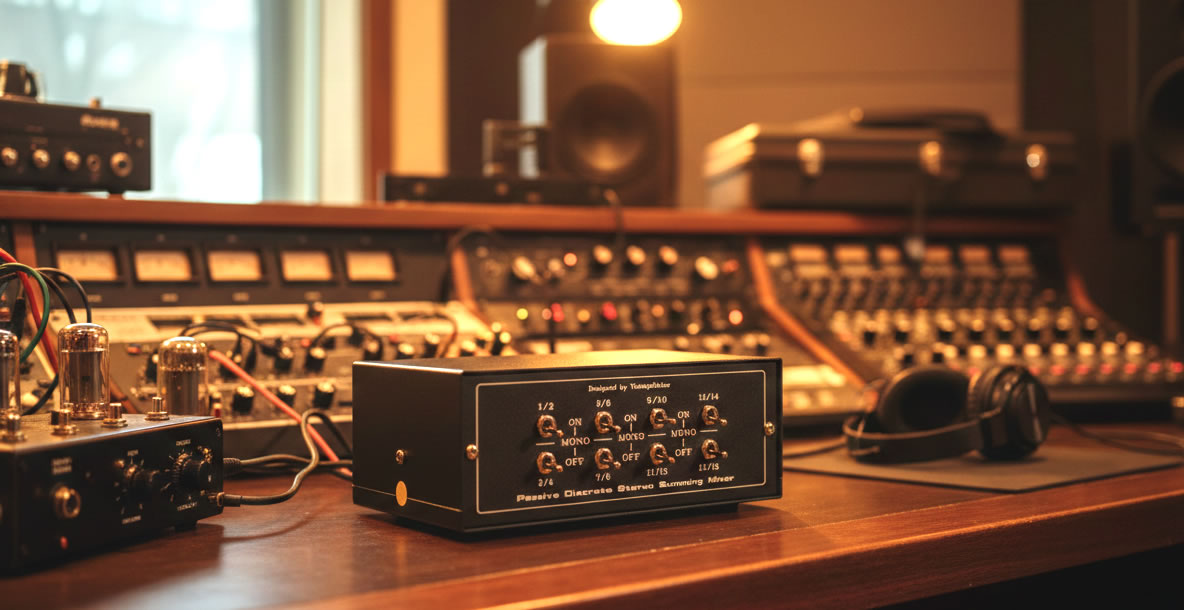
What Makes the Best Analog Summing Mixer for Your Studio?
Off-the-shelf passive summing boxes are built to a fixed specification and sold to everyone. A custom-built unit is calibrated specifically to your audio interface output level, your existing makeup gain stage, and your preferred signal routing.
- The attenuation of a passive summing network (typically 6–25 dB) needs to be matched to what your interface or preamps can recover — a mismatch results in either too little signal or a noisy gain structure.
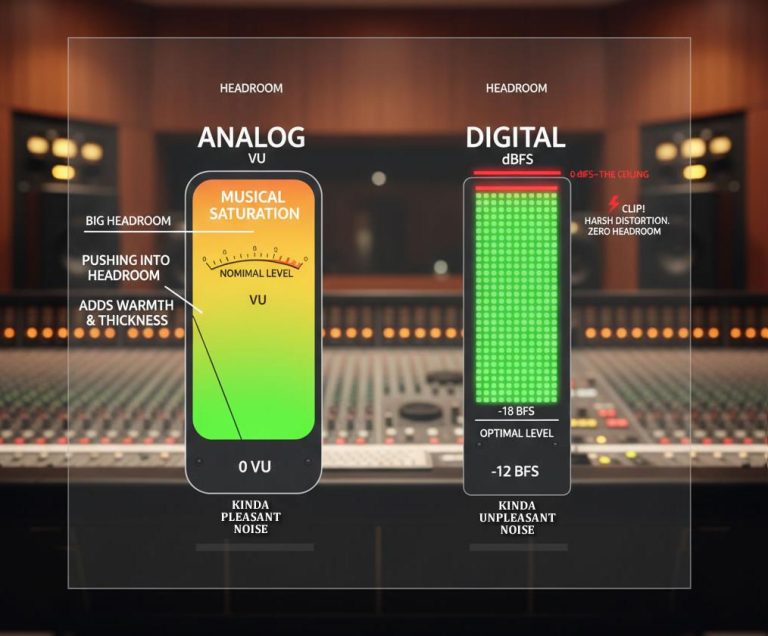
- The headroom behavior changes depending on how the unit is calibrated — a unit built for a +4 dBu interface behaves differently than one built for a -10 dBV consumer-level output.
- Connector type (TRS, XLR, DB-25) is matched to your existing cable infrastructure — no adapters, no signal degradation.
- Every unit is individually built and calibrated to match your specific audio interface output levels and outboard chain, ensuring correct attenuation, predictable gain staging, and optimal headroom within your setup.
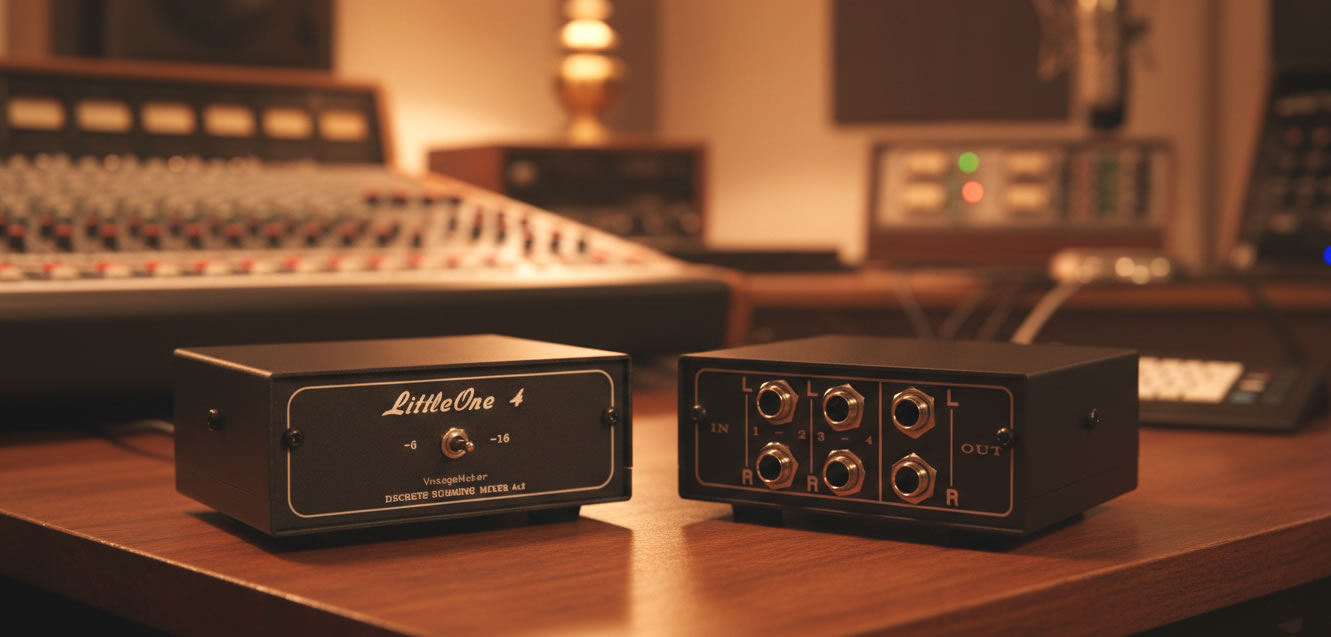
What to Expect When You Start Summing Analog
The first thing most engineers notice is not one dramatic change — it’s a collection of small improvements that add up to a professional, “finished” sound:
- Wider Stereo Field: The image opens up naturally without any artificial processing or stereo-widening plugins.
- Clearer Separation: Instruments find their own place in the mix more easily — you’ll find yourself needing less aggressive EQ to carve out space.
- Solid Low End: The bottom end feels more authoritative and defined, giving the kick and bass a firm foundation.
- Smoother Highs: Digital “harshness” is tamed. Cymbals and vocal “air” frequencies become silkier and more pleasing to the ear.
- Mix Integrity: Your mix holds its depth after export — no more “collapsing” or narrowing when you bounce your track.
These changes are most noticeable when proper gain staging is applied — driving the stems slightly hotter into the summing inputs until the analog bus begins to produce subtle harmonic interaction.
Have questions about passive summing, compatibility, or setup? See the full FAQ and technical specs: Desktop Passive Summing Mixers →